Get an estimate for your video project in less than a minute.

Get an estimate for your video project in less than a minute.
| What are good examples of diversity training videos? Good diversity training videos teach one idea through a situation people recognize. Strong examples include the Royal Society’s animation on unconscious bias, Vernā Myers’ TED talk on walking toward discomfort and our scenario-based series for UBC Canada District. The best ones keep the tone respectful and end with an action viewers can take at work. |
Diversity training videos help employees understand bias, stereotypes, accessibility and respectful behaviour at work. HR teams, unions, public agencies and training providers use them in onboarding, instructor development and compliance programs.
This list covers 11 examples. It moves between animation and live action, so you can compare how each format handles a sensitive subject. Each entry has the video, the organization behind it and, where one exists, a verified figure.
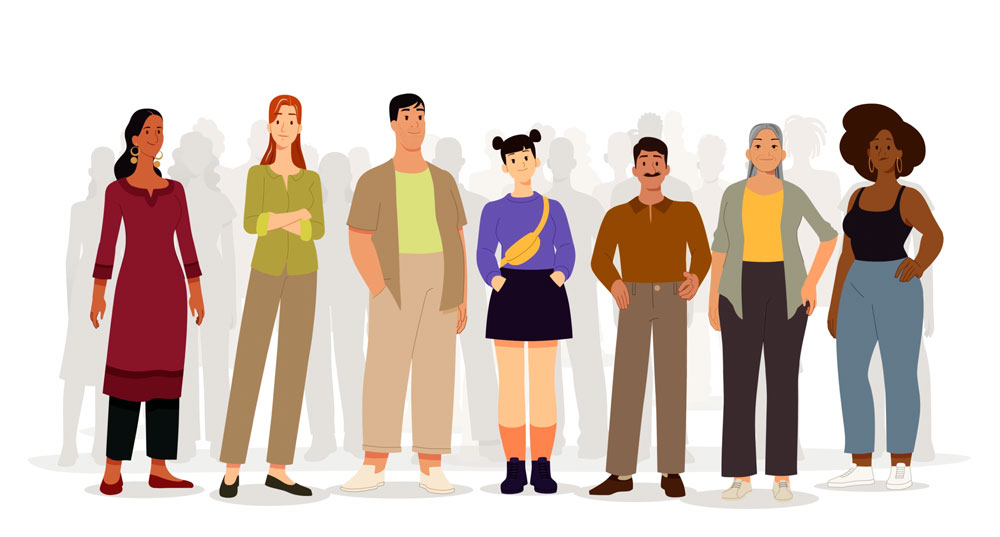
We picked videos published by the organization that made them, such as a scientific academy, a human rights commission or a training body. Each video can be watched on this page. Where a figure exists, it comes from the publisher.
Four of the examples are animated training videos we produced. We have made videos for more than 15 years. For our own work, we describe the communication challenge and the creative approach behind the script.
| # | Video | Made by | Topic | Format |
|---|---|---|---|---|
| 1 | Stereotypes on the job site | UBC Canada District | Stereotypes | Animation |
| 2 | Unconscious Bias @ Work | GV | Unconscious bias | Recorded talk |
| 3 | Understanding unconscious bias | The Royal Society | Unconscious bias | Animation |
| 4 | How to overcome our biases | TED | Bias | Talk |
| 5 | Workplace accessibility | Small Business BC | Accessibility | Motion graphics |
| 6 | Web Accessibility Perspectives | W3C Web Accessibility Initiative | Digital accessibility | Live action |
| 7 | Human rights and inclusion | Canadian Human Rights Commission | Discrimination | Animation |
| 8 | The danger of a single story | TED | Stereotypes | Talk |
| 9 | UDL for trainers | UBC Canada District | Inclusive teaching | Animation |
| 10 | Can we unlearn implicit biases? | American Psychological Association | Implicit bias | Interview |
| 11 | Bias in 15 seconds | UBC Canada District | Bias | Animation |
Client: UBC Canada District.
Project type: 2D scenario-based animation, 1:29.
Communication challenge: Explain stereotypes to apprentices and journeypersons in construction without making anyone feel accused.
Creative approach: The script starts from teamwork, which every crew already values. Then it names stereotypes as an invisible barrier to that teamwork.
It defines a stereotype in one line: a fixed, oversimplified idea about a group of people. It shows that positive and negative assumptions both limit people. “Young workers are always tech savvy” sits next to “older workers can’t adapt.” Then it moves to examples from the trade, like assuming women aren’t suited to physical work. Its advice is practical. See each person as an individual. Ask questions instead of assuming. Value skills and contributions.
This is the full version. A 30-second cut appears in our guide to compliance training topics, and the whole six-video series is in our UBC Canada District case study.

Unconscious Bias @ Work is a recorded talk published by GV, formerly Google Ventures, on its YouTube channel. It runs just over an hour.
The talk explains that unconscious biases are created and reinforced by our environments and experiences. When people move fast or lack data, those biases fill in the gaps. That shapes product decisions and how coworkers treat each other. The talk treats bias as part of how every mind processes information. People listen longer when they don’t feel singled out.
By the numbers: Google says more than 26,000 Googlers took part in its Unconscious Bias @ Work workshop. The GV recording has more than 390,000 views on YouTube.
Understanding unconscious bias is a short animation from the Royal Society, adapted by Professor Uta Frith. It runs about three minutes.
The Society made it for the people who sit on its selection and appointment panels. It covers how candidates may present themselves differently, how to recognize bias in yourself and others and how to spot unreasoned judgement. Animation keeps the focus on the decision, not on any one person. The Royal Society briefing on unconscious bias goes with the video. Panel members receive it before each meeting, and it is read at the start as a reminder.
By the numbers: More than 1.5 million views on the Royal Society’s YouTube channel.
How to overcome our biases? Walk boldly toward them is a TED talk by diversity advocate Vernā Myers, recorded at TEDxBeaconStreet. It runs about 18 minutes.
Her ask is simple. Acknowledge your biases. Then move toward the groups that make you uncomfortable, not away from them. She uses humour to lower the guard of a room that expects a lecture. One specific behaviour gives viewers something to try after the session ends.
By the numbers: More than 5 million plays on TED.com.
Client: Small Business BC.
Project type: Motion graphics training video, 3:18.
Communication challenge: Define workplace accessibility for small business owners and answer the cost worry before it stops them.
Creative approach: The video opens and closes with the same question: what do you think accessibility means? The viewer answers it twice and sees how their own definition changed.
In between, the script defines a barrier as anything that hinders full and equal participation in society. It names five kinds: communication, technology, attitudinal, systemic and environmental. It uses the Accessible Canada Act for the definition of disability. Then it meets the cost objection head on. According to the Retail Council of Canada, more than two thirds of accommodations cost less than $500.
We used abstract graphics instead of characters for this series. You can see all five videos in our Small Business BC case study.
Web Accessibility Perspectives is a compilation of 10 short videos from the W3C Web Accessibility Initiative. It runs 7:36.
Each short shows one feature in daily use, such as keyboard access, colour contrast, captions or text to speech. The line that frames the series is “essential for some, useful for all.” It suits diversity and inclusion training because it shows inclusion as a set of design choices anyone can make. Each topic has its own page on the W3C Web Accessibility Perspectives site.
By the numbers: The series covers 10 topics and was co-funded by the European Commission. The compilation has more than 220,000 views on YouTube.
This short animation from the Canadian Human Rights Commission explains what the Commission does and who it helps. It runs about two minutes.
A dog in a CHRC vest walks the viewer through the mandate: protect and promote human rights, and advance equality and inclusion. The script lists grounds of discrimination such as race, age, disability, religion and sex. It then follows one complaint from the mailbox to mediation. For people who work for or are served by federally regulated organizations, like banks, phone companies and trucking companies, it answers a practical question. Where do I go if I am treated unfairly?
By the numbers: The Commission says it helps thousands of people each year address human rights concerns, resolve issues or find information about their rights.
The danger of a single story is a TED talk by novelist Chimamanda Ngozi Adichie, recorded at TEDGlobal in 2009. It runs about 19 minutes.
Adichie tells how she found her own cultural voice. Her warning is that if we hear only a single story about another person or country, we risk a critical misunderstanding. It explains stereotypes through personal experience, with no jargon. The phrase “single story” is easy to remember. A group can come back to it in discussion long after the video ends.
By the numbers: More than 43 million plays on TED.com.
Client: UBC Canada District.
Project type: 2D scenario-based animation, 0:30 cut.
Communication challenge: Show instructors that one way of teaching can leave some learners behind.
Creative approach: The video puts the instructor inside a safety session they have run many times. One apprentice is focused. Another is zoning out. Someone mutters that they never get it until they see it on site.
“Same training, different results.” The script then shifts the question from what we teach to how we teach it. That sets up Universal Design for Learning. Inclusion here is about how people learn, not only who is in the room. It sits alongside our other training video production work for instructors and apprentices.
Can we unlearn implicit biases? is an episode of Speaking of Psychology, the American Psychological Association’s podcast, with Harvard psychologist Mahzarin Banaji. It runs about 51 minutes.
Banaji is one of the pioneers of implicit bias research. She explains where implicit biases come from, how implicit bias differs from prejudice and which biases have lessened over time. A long interview suits managers and trainers who want the research behind a shorter module. It prepares them for the questions their teams will ask.
By the numbers: Banaji co-founded Project Implicit in 1998 with Tony Greenwald and Brian Nosek. The APA episode has more than 11,000 views on YouTube.
Client: UBC Canada District.
Project type: 2D scenario-based animation, 0:15 cut.
Communication challenge: Introduce bias to a construction crew in the time it takes to scroll past a post.
Creative approach: The script starts with a strength. The crew works with people of different backgrounds, ages, experiences and skills. That is what makes it stronger. Then it names the problem. Without realizing it, we make quick judgments about each other.
Fifteen seconds is enough to name one idea. A cut this short works as a teaser before a session or as a reminder after it.
The diversity training videos on this list share five patterns.

The UBC Canada District series opens on a job site or a training session. The Royal Society animation is built for a selection panel. Viewers see the problem before they hear the term for it.
The GV talk and the APA interview explain bias as part of how the mind works. People stay open when they don’t feel accused.
Walk toward discomfort. Ask instead of assuming. Remove one barrier. A single action is easier to remember after the session than a list of principles.
A cafe you can’t get into. Type too small to read. Captions on a video. Examples like these turn a value into a design choice.
A 15-second cut can open a session. A three-minute animation can carry a full module. A long talk suits managers who want the research.
Diversity training videos teach employees about bias, stereotypes, accessibility and respectful behaviour at work. Organizations use them in onboarding, instructor development and compliance programs. They range from short clips to long talks and interviews.
Long enough for one idea. The animated videos we produced for UBC Canada District run from 15 seconds to 1:29. Small Business BC’s accessibility video runs 3:18 because it defines a whole topic. Talks for managers often run 18 minutes or more.
Both work. Animation lets you show a biased moment without casting a real person as the “bad guy.” Live action suits talks like the TED examples above, where a trusted speaker carries the message.
Common topics are unconscious bias, stereotypes, accessibility, inclusive teaching and how to raise a concern. Our compliance training topics guide covers related subjects such as harassment and discrimination.
Start with one audience and one situation they recognize. Write the script to be heard, then approve storyboards before animation starts. Our guide on how to make a training video walks through each step.
The diversity training videos that hold attention start with a situation people recognize. They treat bias as something everyone has. They ask for one change in behaviour.
If you are planning a series, choose the one moment your audience needs to see differently. Then pick the format, animation or live action, that shows that moment most clearly.

Larry is the Founder and Producer at Mammothic Films, with more than 15 years of production experience. He leads a team that creates story-driven videos for businesses and brands. A marketer, designer, and animator, Larry has overseen the production of more than 1,500 videos for Fujitsu, Logitech, Warner Brothers, NFL, Blockdaemon, Astronomer, Canonical, and 370+ other companies in Canada, the United States, and around the world.
Larry is a devout Christian who believes in placing God first, and that everything else is a blessing that comes from serving Him. When he’s not working, he’s hanging out with his wife and three kids, playing the piano, or sightseeing.
We use cookies to improve your experience on our site.
Manage your cookie preferences below:
Essential cookies enable basic functions and are necessary for the proper function of the website.
