Get an estimate for your video project in less than a minute.

Get an estimate for your video project in less than a minute.
A complete guide to promotional video: the main types with real examples, promotional video ideas grouped by goal, and how to choose, plan, script, produce and measure one. Primarily live-action, updated for 2026.
| What are the main types of promotional videos? The main types of promotional videos are product videos, brand films, social video ads, launch videos, testimonials, event promos, sizzle reels, recruitment videos, facility videos, product demos, brand documentaries, sales videos, music videos, profile videos and service videos. Each one does a different marketing job. Choose the format by what you are promoting and where it will run. |
A promotional video is a marketing video made to generate interest in a product, service, event, campaign or brand and move the viewer toward a specific action, whether that is visiting a website, requesting a quote, registering for an event or buying a product. Promotional videos range from a short social ad to a longer brand film, and the right format depends on what you are promoting, who needs to see it and where the video will be used.
This guide covers 15 types of promotional video with examples, then walks through how to choose, plan, brief, script, produce, distribute and measure one. It focuses primarily on live-action promotional video production, since that is the work we produce at Mammothic Films for brands and marketing teams across Canada and the United States. Promotional videos can also use animation, motion graphics or a combination of live action and graphics.
The types of promotional video covered in this guide are product videos, brand films, social video ads, launch videos, testimonial videos, event promos, sizzle reels, recruitment videos, facility or location videos, product demos, brand documentaries, sales videos, music videos, personal brand or profile videos and service promotional videos. Each one exists to do a different marketing job. The table below is a fast way to match a format to what you are trying to achieve and where it will run. Further down, the same ideas are grouped by goal so you can start from what you want to promote.
| Promotional video type | Best used for | Typical placement |
|---|---|---|
| Product video | Showing a physical product | Product pages, campaigns, ads |
| Brand film | Building brand awareness | Homepage, About page, campaigns |
| Social video ad | Capturing attention quickly | Instagram, TikTok, LinkedIn, YouTube |
| Launch video | Introducing something new | Launch pages, ads, email |
| Testimonial video | Building trust | Landing pages, sales, social |
| Event promo | Promoting or recapping an event | Social, event pages, sponsorship |
| Sizzle reel | Creating excitement quickly | Pitches, events, landing pages |
| Recruitment video | Attracting candidates | Careers pages, LinkedIn |
| Facility or location video | Showing a physical environment | Website, sales, tourism |
| Product demo | Showing something in use | Product pages, sales, support |
| Brand documentary | Telling a true story with credibility | Website, About page, sales decks |
| Sales video | Supporting a sales conversation | Sales email, proposals, meetings |
| Music video | Promoting an artist or release | YouTube, social, artist pages |
| Personal brand or profile video | Promoting a person | Personal site, LinkedIn, social |
| Service promotional video | Promoting a service business | Website, sales, case studies |
Promotional video is an umbrella term, not a single production style. It describes any video whose purpose is to promote something and prompt a response, which is why the category spans everything from a six second social ad to a three minute brand film. Because the label covers so much ground, it helps to separate it from a few terms it often gets confused with.
A commercial is advertising creative made mainly for paid distribution, while a promotional video is broader and also lives on websites, in sales, in email, at events and on organic social. A brand video promotes the company or brand itself, so it is one type of promotional video rather than a separate category. An animated video mainly helps someone understand a product, service or idea, whereas a promotional video puts more weight on generating interest or action, though some videos do both. Corporate video is a broad business-communications category. Some corporate videos are promotional, but training, compliance and internal communications generally are not.
Here are the formats in detail. Each entry follows the same structure so you can compare them quickly: what it is, what it is best for, where it runs, what you actually film and a typical runtime.
These categories overlap. Product video describes what the piece promotes, launch video describes when and why it is released, social ad describes where it runs, and documentary describes how the story is told. In practice, one video may fit several categories.
A product video shows a physical product doing what it does, filmed close enough to see the detail that makes it worth buying: the texture, the mechanism, the finish, the moment of use. It can answer a buyer’s most practical questions: what the product looks like, how it works and what it is like to use.
Best for: showing a physical product. Where it runs: product pages, campaigns and paid ads. What to film: the product in use, close-up detail, and the product in the setting where it belongs. Typical runtime: 15 to 60 seconds.
A brand film promotes the company itself rather than a single product. It is built around the people, the place and the reason the business exists, and its job is to make an audience feel something about the brand. Brand films are often scripted, directed and staged; the aim is an authentic impression, not raw documentary.
Best for: brand awareness and reputation. Where it runs: homepage, About page and top-of-funnel campaigns. What to film: founder and staff interviews, the real work, the workshop or storefront, and considered b-roll. Typical runtime: 1 to 3 minutes.
Social video ads may be original platform-native creative or cutdowns from a larger campaign. What matters is that they are shaped for where they run: captions for sound-off viewing and a length measured in seconds. Choose the aspect ratio for the placement: often 9:16 for short-form feeds, with 1:1 or 16:9 versions where the media plan calls for them. For fast-scrolling feeds, I normally try to establish the subject or visual hook immediately.
Best for: capturing attention and paid-media performance. Where it runs: Instagram, TikTok, LinkedIn and YouTube. What to film: a concept framed wide enough to crop to vertical and square, with several hook options. Typical runtime: 6 to 30 seconds.
A launch video is the hero piece that introduces something new. It can set the creative direction for a campaign, with versions adapted for the site, email, paid media and sales, and it sets the tone the rest of the campaign follows.
Best for: product launches and seasonal campaigns. Where it runs: launch pages, ads and email. What to film: the hero concept plus every supporting shot the cutdowns will need, all on the same day. Typical runtime: 30 to 90 seconds for the hero, with shorter cutdowns.
A testimonial video puts a real customer on camera describing, in their own words, what changed for them. A customer’s own account can be more persuasive than a brand claim, especially when it includes a specific problem, result and context.
Best for: building trust and supporting sales. Where it runs: landing pages, sales conversations and social. What to film: a two-camera interview, plus b-roll of the customer world and, where relevant, the product or service in use. Typical runtime: 60 to 120 seconds, with short quote clips pulled out.
Event promos cover and promote a launch, conference, tournament or activation, and turn it into content while it is still current. The format usually has two jobs: a fast highlight cut delivered while the event is fresh, and a longer recap that becomes an evergreen promo for the next edition or sponsor pitch.
Best for: promoting or recapping an event and supporting sponsorship. Where it runs: social, event pages and sponsor decks. What to film: the atmosphere, the key moments, participant and organizer reactions, and sponsor visibility. Typical runtime: 30 to 120 seconds.
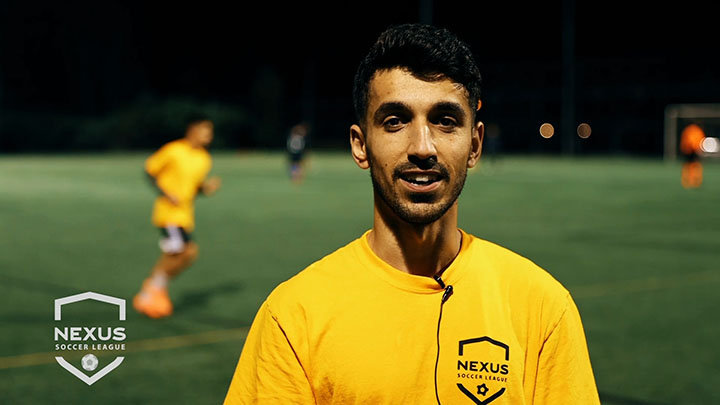
Example. This promo we produced for the Nexus Soccer League is a good illustration of an event and sports promo. The goal was to capture the energy of the league and give it a piece it could use to attract players and sponsors, so the edit leads with movement and atmosphere rather than information.
A sizzle reel is a fast, energetic cut that compresses an event, a season or a whole body of work into under a minute. It is built for momentum, not detail, and it is what you reach for to make an impression quickly.
Best for: creating excitement fast. Where it runs: pitches, events and landing pages. What to film: your strongest existing footage, or a shoot planned for high-energy moments. Typical runtime: 30 to 60 seconds.
A recruitment video shows what it is actually like to work somewhere, filmed with the people who already do. Culture videos are close cousins aimed at customers and partners rather than candidates, showing the values behind the brand.
Best for: attracting candidates and communicating culture. Where it runs: careers pages and LinkedIn. What to film: unscripted staff interviews, real workspaces and a normal day on site. Typical runtime: 60 to 120 seconds.
A facility or location video puts your store, plant, venue or office on camera so a customer sees the real place before they arrive. For a physical business it removes uncertainty, which lowers the barrier to visiting or booking, and the footage doubles as b-roll for every other promo.
Best for: showing a physical environment. Where it runs: website, sales and tourism. What to film: a walkthrough on a gimbal, the key spaces, and the environment in use. Typical runtime: 45 to 90 seconds.
A promotional product demo shows enough of the product in use to help a prospective buyer understand its value. A detailed post-purchase tutorial is better treated as customer education or support content, although the two formats can share footage. A live-action demo shows real hands on the real product, which suits tactile or physical products; animation or motion graphics can be clearer for software, data or anything that is hard to film.
Best for: helping people understand a product. Where it runs: product pages, sales and support. What to film: the product in use, close on the steps that matter, with clean audio for any narration. Typical runtime: depends on complexity, from 30 seconds to several minutes.
Example. When the product is software or hard to film, an animated demo is often clearer. This animated video, produced by our sister studio Creamy Animation, shows how animation handles a software product.
A brand documentary tells a true story with real people and real footage rather than a scripted, staged scene. A brand documentary builds its story from real people, events and evidence, even though the production still involves editorial choices, direction and editing. It suits mission-driven organizations, longer stories and anything where authenticity matters more than polish. It usually runs longer because the substance carries it.
Best for: authentic, story-led promotion. Where it runs: websites, About pages, sales decks and pitches. What to film: real interviews, the work as it happens, and enough b-roll to build a story rather than a speech. Typical runtime: 2 to 4 minutes.
Example. Life in A Box, which we produced for International Paper, works as a brand documentary. It follows a real story rather than selling a product, and the credibility comes from what the camera actually captures.
Example. This documentary we produced for United Purpose, an international development organization, is a second example. It puts the organization’s work and the people it serves on camera and lets them tell the story, which is what a documentary does for a mission-driven organization.
A sales video is built to support a sales conversation rather than run as an ad. It gives a sales team one clear, repeatable pitch they can send before a call, play in a meeting or attach to a proposal, so every prospect hears the same strong version of the story. It leads with the problem, the solution and the proof.
Best for: sales enablement and one-to-many pitching. Where it runs: sales emails, proposals, decks and meetings. What to film: the offer explained simply, the proof that it works, and a clear next step. Typical runtime: 60 to 120 seconds.
Example. This sales video we produced for MTG Traders is built to carry the pitch on its own, leading with the offer and the reason to act rather than background.
A music video promotes an artist, a song or a release, and it is a promotional format in its own right for musicians, labels and entertainment brands. The job is to build an audience and an identity around the music, so the craft sits in performance, look and edit rather than a marketing message.
Best for: artists, labels and entertainment promotion. Where it runs: YouTube, social platforms and artist pages. What to film: the performance, the world around the artist, and the visual idea that matches the track. Typical runtime: the length of the song.
Example. This music video we produced for Tamara Arbeau is built around the performance and a simple visual idea that lets the song lead.
A personal brand or profile video promotes a person rather than a company: a founder, a creator, a professional or a public figure. It builds trust and recognition around an individual, which matters for anyone whose reputation is the offer. Like a testimonial, its power comes from a real person being themselves on camera.
Best for: founders, creators and personal brands. Where it runs: personal sites, About pages, LinkedIn and social. What to film: the person in their real environment, an unscripted interview, and b-roll of what they actually do. Typical runtime: 60 to 120 seconds.
Example. This profile piece we produced for Lloyd Tevedzai is built around the person, using an interview and real footage to introduce who he is rather than a scripted pitch.
Service promotional videos promote a business that sells expertise or an outcome rather than a physical product. When there is nothing to put on a table, the video has to create visual proof another way, by showing the people, the process and the result.
The reliable structure is the customer problem, then the people and process that solve it, then the service in action, then the outcome or proof. It works for professional services, construction, healthcare, financial services, consulting, hospitality, B2B services and home services.
Best for: service businesses with no physical product to demonstrate. What to film: the team at work, the process step by step, the client environment and, where possible, a customer describing the result. Typical runtime: 60 to 120 seconds for a promo, longer for a case-study cut.
The types above are the formats. The ideas below are the campaigns you can actually make with them, grouped by the goal they serve. Start from what you are trying to do, then pick the one or two ideas that fit. You do not need all of them, you need the ones that match the job in front of you.
When the goal is to sell a product or service, the workhorse ideas are the product demo, the before-and-after, the feature spotlight and the unboxing or first look. A demo shows the thing doing its job, which answers the question every buyer has. A before-and-after puts the starting state and the result side by side and lets the gap do the selling, so it suits renovation, fitness, cleaning and any service with a visible outcome. A feature spotlight picks one strong feature and builds the whole video around it. A tightly focused feature video is usually easier to understand and cut into short versions than a video trying to cover every feature. An unboxing borrows the small thrill of opening something new and doubles as a demo. We shoot these to lead with the single most convincing moment, then build the rest of the runtime around it.
When the product is software or an abstract service, an animated video does the same job as a demo. This animated video for Copilot AI is an example of the format.
When the goal is trust and recognition, reach for the founder story, the meet-the-team or culture piece, the brand film and the mini-documentary. A founder story puts a face and a reason behind the business, which matters most for younger brands that have not earned a reputation yet. A culture video shows who is behind the work and warms up both sales and hiring. A brand film sells a feeling rather than a feature, and a mini-documentary goes deeper on one real customer or project and earns credibility through detail. These are live-action by nature: live action is useful when the audience needs to see the actual people, place or process behind the claim. We shoot the people in their real environment and cut the answers into a story rather than a speech.
For an abstract or invisible product, an animated brand story can show what a live shoot cannot. This animated overview for Blockdaemon is an example.
When the goal is reach on social, the ideas are the vertical social ad, the trend or creator-style video, the quick tip or how-to short and the testimonial cutdown. For TikTok, Reels and Shorts, short vertical versions are usually essential, so we frame and shoot for the phone rather than cropping a wide edit down. Other placements may still need square or horizontal edits. A trend-style video trades polish for the feeling of being native to the platform. A how-to short teaches one small useful thing connected to what you sell, and it keeps working long after a paid ad stops. A testimonial cutdown pulls the strongest lines from a longer interview into a short vertical clip. One idea, one hook, captions for sound-off viewing, and a cut before anyone gets bored.
When the goal is a moment, the ideas are the teaser, the launch film, the event sizzle reel and the seasonal campaign. A teaser withholds, showing just enough to build anticipation before the day. The launch film is the centrepiece that announces the thing, shows what it does and says why it matters. An event sizzle reel captures the energy of an event and sells the next one, which is also strong proof for a sponsor. A seasonal campaign can borrow relevance from an event or buying period the audience already recognizes. We plan the launch film to be cut down from the start, so one shoot produces the hero version and every social edit around it.
The examples on this page are all live-action promotional videos we produced at Mammothic Films, placed beside the format each one illustrates. The United Purpose and International Paper documentaries both sit under brand documentaries. The Nexus Soccer League promo sits under event and sponsorship promos. The MTG Traders sales video, the Tamara Arbeau music video and the Lloyd Tevedzai profile each sit under their formats above. Beyond these, our work spans testimonial, marketing, training and documentary pieces for clients including New Gold, the City of Coquitlam, the City of Burnaby and International Paper. To see more of the work and how we produce it, visit our promotional video production page.
Start from the marketing job the video needs to do, not the style you like. Once the objective is clear, the format usually chooses itself. Use the table below as a shortcut from goal to starting format.
The fastest way to choose is to work back from the goal. To introduce a new product, start with a product launch video. To help people understand how a product works, start with a product demo. To generate leads, a service or product promo works best. To build trust, use a customer testimonial. To increase brand awareness, make a brand film. To promote an event, use an event promo. To generate paid-media creative, produce short-form video ads. To recruit employees, make a recruitment or culture video. To show a venue or operation, use a facility video. To make an immediate impression, cut a sizzle reel.
When the subject is software, data or an abstract idea, animation often communicates it better than a shoot. This motion graphics piece for CryptoSea is an example of animation carrying an abstract product.
Much of the avoidable risk in promotional production is addressed during planning. Five decisions matter before anyone picks up a camera.
Define the business result the video is meant to drive: generate leads, launch a product, increase registrations, drive traffic, improve product consideration, recruit employees or build awareness. Everything else follows from this.
Be specific about who needs to respond. Operations directors at manufacturing companies evaluating new automation equipment is far more useful than our customers, because it tells the script what to say and the shoot what to show.
Choose one central idea. Promotional videos get weaker when the script tries to communicate every selling point. If a viewer remembers only one thing, decide now what it should be.
Define the next action you want: visit, book, register, buy, download, contact or learn more. A promotional video without a clear call to action leaves its result to chance.
Determine the channels, aspect ratios, cutdowns and placements before the shoot, so production captures footage that works for the full campaign. In my experience, deciding distribution after filming often creates avoidable reframing, pickup-shoot or re-editing costs.
A creative brief keeps everyone aligned and prevents expensive changes later. Fill in these fields before production begins.
A useful brief answers a short list of questions before production begins. Define the business objective, so everyone knows what the video should accomplish. Name the target audience and the problem that matters to them. Settle on the one core message you want remembered, and the proof that makes it believable. Decide the call to action, and where the video will be distributed. Set the master runtime, the cutdowns you need and the aspect ratios each channel requires, such as 16:9, 9:16 and 1:1. Agree the deadline and the launch date, name who signs off on creative, and list any production constraints such as locations, talent, access and schedules.
A promotional script does not need to be complicated. This six-part structure is a useful starting point for direct-response and product or service promos, but documentary and image-led work may need a different structure.
The structure is simple. Open with a hook that gives the viewer a reason to keep watching. Establish the problem or opportunity so they understand why the subject matters. Introduce the product, service or brand you are promoting. Show the benefit, meaning what changes for the viewer. Offer proof through demonstration, testimonial, data or visual evidence. Close with a single call to action that tells the viewer what to do next.
One mistake I see in promotional scripts is spending the opening twenty seconds introducing the company. Unless the company itself is the story, get to the reason the viewer should care much faster.
At Mammothic, I organize most promotional productions into seven stages, whether the shoot is a single afternoon or several days.
Production usually moves through seven stages. It starts with discovery and a creative brief that settle the audience, objective, message, channels and deliverables. Concept development then decides the creative approach and how the idea works on screen. The script develops the story, structure and marketing message. Pre-production covers the shot list, storyboard where needed, locations, casting, crew, equipment, props, wardrobe, scheduling, permits and releases. Production is the shoot itself: camera, lighting, audio, direction, interviews, hero footage and b-roll. Post-production is the picture edit, graphics, colour, sound design, music, captions and revisions. Delivery is the master video plus the approved campaign assets in the formats each channel needs.
Plan for the whole campaign before the shoot rather than producing one master video and trying to repurpose it afterwards. When the concept, access and schedule allow, one well-planned shoot day can produce a hero video plus a set of campaign cutdowns and social assets, all cut from the same footage.
A single shoot can produce a whole set of assets. The hero video usually runs 60 to 90 seconds. Campaign cutdowns come in at around 30, 15 and 6 seconds. Social formats cover 16:9, 9:16 and 1:1. On top of that you can pull testimonial clips, b-roll edits, silent and captioned versions and thumbnail frames from the same footage.
If we are shooting a product campaign, I prefer to know the required social cutdowns before we film. It changes how we frame every shot and gives the editor room to build vertical versions later.
There is no ideal promotional video length independent of context. Runtime should follow the audience, the message and the placement. The ranges below are useful starting points, not rules.
As a rough guide, a short paid or social ad runs 6 to 30 seconds, and a product promo 30 to 60 seconds. A landing-page promo sits around 30 to 90 seconds. A brand film or a testimonial usually runs one to three minutes. A product demonstration depends on the complexity of what you are showing. These are starting points, not rules, and runtime should always follow the audience, the message and the placement.
Live-action budgets are usually shaped by the scope of the shoot and post-production rather than runtime alone. The factors that move cost the most are crew size, number of shoot days, locations, actors or talent, equipment, set design, travel, motion graphics or visual effects, music licensing, editing, the number of deliverables and the revision scope.
A single shoot planned to produce several deliverables can reduce repeated setup and crew costs, although the saving depends on the number and complexity of the deliverables. For how we structure this, see our promotional video production service and the pricing page.
A few avoidable mistakes account for most weak promotional videos.
A few avoidable mistakes account for most weak promotional videos. The most common is trying to say too much, when one video does not need to contain the whole website. Another is starting with the company instead of the viewer, since company history is rarely the strongest opening hook. Choosing the format before defining the goal puts production ahead of strategy. Planning distribution after filming creates problems with framing, runtime and cutdowns. Not capturing enough b-roll makes interview and testimonial edits harder than they need to be. Treating audio as secondary can make otherwise strong footage feel cheap. Making one master video and stopping there wastes the shoot, because campaign planning should happen before production. Finally, a video with no clear call to action leaves the viewer unsure what to do next.
Decide how success will be measured during strategy, not after the video has launched. Tie the metric back to the objective you set at the start.
Match the measure to the objective. For awareness, look at reach, impressions and video views. For engagement, look at watch time, completion and interactions. For website traffic, track click-throughs and landing-page visits. For lead generation, count form submissions, calls and booked meetings. For ecommerce, watch product-page behaviour and purchases. Event promotion is measured in registrations, recruitment in applications, and sales enablement in engagement and assisted opportunities.
A promotional video is a marketing video made to generate interest in a product, service, event or brand and move the viewer toward an action such as visiting a site, requesting a quote or buying. It is an umbrella term that covers many formats, from a short social ad to a longer brand film, rather than one specific style of production.
There are 15 types of promotional video: product videos, brand films, social video ads, launch videos, testimonial videos, event promos, sizzle reels, recruitment videos, facility videos, product demos, brand documentaries, sales videos, music videos, personal brand or profile videos and service promotional videos. Each type suits a different marketing objective and placement.
You make a promotional video in stages: set the objective and audience, write a short script around one core message, plan the shoot and deliverables, film the hero footage and b-roll, then edit the master version and its cutdowns. Deciding distribution and formats before the shoot is what keeps the whole campaign consistent.
It depends on placement. Social ads usually run 6 to 30 seconds, product and landing-page promos 30 to 90 seconds, and brand films or testimonials one to three minutes. There is no ideal length independent of context; runtime should follow the audience, the message and where the video will appear.
Live-action budgets are shaped by the scope of the shoot and post-production rather than runtime alone. The main drivers are crew size, shoot days, locations, talent, equipment, travel, graphics, music licensing, editing and the number of deliverables. You can see how Mammothic structures this on our pricing page.
A strong promotional video opens with a hook, establishes why the subject matters, introduces what is being promoted, shows the benefit to the viewer, offers proof through demonstration or testimonial, and ends with one clear call to action. It should carry a single core message rather than trying to say everything at once.
A commercial is advertising creative made mainly for paid distribution, usually broadcast or paid social. A promotional video is broader: it includes commercials but also videos used on websites, in sales, in email, at events and on organic social. Every commercial is a promotional video, but not every promotional video is a commercial.
Promotional videos work across websites, product and landing pages, paid social and search ads, organic social, email campaigns, sales conversations, events and careers pages. The best results come from deciding the placements before filming, so the shoot captures the aspect ratios and cutdowns each channel needs.
Yes, and it is usually the most cost-effective approach. A single live-action shoot planned for the edit can produce a hero video plus a set of shorter cutdowns in multiple aspect ratios, along with testimonial clips and b-roll. Planning the campaign before the shoot is what makes this possible.
Both work, and the right choice depends on what you are promoting. Live action suits products, people, places and events that benefit from being seen as they really are. Animation or motion graphics can be clearer for software, data or abstract ideas, and many promotional videos combine the two. Mammothic focuses on live-action production.
The right promotional video is not the one with the best style, it is the one that does the marketing job in front of you. Start from the objective and the audience, choose the format that fits, and decide where the video will run before you film so a single shoot can feed the whole campaign. Plan the script around one core message, capture the cutdowns and aspect ratios each channel needs, and decide how you will measure success before launch rather than after.
Mammothic Films produces live-action promotional video production for brands and marketing teams across Canada and the United States, planned so one shoot day becomes a full campaign. To talk through which formats your next campaign needs, request a quote.


Larry is the Founder and Producer at Mammothic Films, with more than 15 years of production experience. He leads a team that creates story-driven videos for businesses and brands. A marketer, designer, and animator, Larry has overseen the production of more than 1,500 videos for Fujitsu, Logitech, Warner Brothers, NFL, Blockdaemon, Astronomer, Canonical, and 370+ other companies in Canada, the United States, and around the world.
Larry is a devout Christian who believes in placing God first, and that everything else is a blessing that comes from serving Him. When he’s not working, he’s hanging out with his wife and three kids, playing the piano, or sightseeing.
We use cookies to improve your experience on our site.
Manage your cookie preferences below:
Essential cookies enable basic functions and are necessary for the proper function of the website.
