How do you make a corporate video?
To make a corporate video, establish your goals and write a compelling script. Create a storyboard, hire a videographer and cast the right people. Choose a location, then shoot, edit and launch. The best corporate videos feel authentic, build a human connection and use creative storytelling instead of stiff messaging. |
Make A Corporate Video
You might have heard a lot about corporate videos being old-fashioned, outdated, traditional, and no longer relevant. Whoever said so, they’re right. Without the right elements, a corporate video can be stiff, cheesy, and feel like it has come straight out of the ’70s. But, giant corporations like Google, Starbucks, and Hubspot don’t think like that.
Video is used across websites, presentations, sales, internal communications and social channels because it can combine a speaker, demonstrations, graphics, text and sound in one piece of content. One of the most common corporate-video formats is the customer testimonial.

That is the reason they have brand credibility across the globe. They believe that a professionally produced corporate video can be a fantastic tool to include in your marketing strategy and attract customers. In fact, a corporate video is more like a standard project, and if you’re a freelance video pro, you must experience how it works for your business.
For many companies, corporate videos are a reliable and credible marketing tool. And if you know how to make your work look professional in the videos, you will get more business. A corporate video has the ability to attract potential clients and top talent for the growth of the company. If you do it right, this tool in your marketing video library can support your goals.
Benefits of A Corporate Video
Corporate video is an umbrella term for video produced on behalf of an organization. It can include brand films, executive communications, recruitment, customer testimonials, training, internal communications, investor content, product and process videos and other business formats. The production approach changes with the audience and purpose.
Allows Customers to Remember your Brand Message
One of the proven ways to get your brand message across is to show people what you do. Video can combine several forms of information at once: spoken explanation, on-screen text, demonstrations, interviews, graphics, B-roll and sound.
The advantage is not that the brain magically processes video faster; it is that the producer can choose the best visual and audio evidence for each point. You then guide the viewer through that evidence in a deliberate order, which is what makes the message easier to follow and remember.
Engage your customers with video
It is worth mentioning that the market is oversaturated regardless of the industry you work in. Every business is making efforts to grab the attention of potential clients.
Deciding what the viewer needs to understand or do after watching is what lets you choose the right format. A recruitment video may need employee voices and workplace footage; an executive message may depend on a strong on-camera performance and clear graphics; a product video may need demonstrations and B-roll. The format should follow the communication job, not a generic promise to increase engagement.
Build your brand
A creative video is, without a doubt, a great way to add another direction to your business’s branding. When you show your business’s personality behind the logo, it creates a closer connection with your consumer and strengthens the old ones.
By enriching branding this way, you can increase your business’s chances to attract more customers to do business with you.
How to make a corporate video that helps build your brand
1. Establish Your Goals
Your main goal to make a corporate video is to create an asset for your company and business that can enable it to improve its value via presentation and communication. However, you must ensure that your message is not complicated and has only relevant information. Adding uninteresting information will not entice viewers to watch your video completely.
2. Write a compelling script
To create a corporate film, you will need a video script. Whether it is a promotional brand film, a video for social media sharing, or a corporate a video testimonial, a well-written script can inspire your viewers to take action.
To create a script that can drive the desired results, you will need to write some video briefs. The trick is excellent to understand your potential viewers and the objectives of your video. Also, you will be able to demonstrate the value of your business. Consider these insights to create a script.
- The primary purpose of your corporate video
- The action you want your audience to take
- Your target audience and what do they do online
- Value your video can bring to the audience
- Distribution channels you will use
The pointers will allow you to empathize with your viewers and develop a deeper understanding of how you can communicate with them. The brief can also help you create a marketing story to engage with relevant, compelling, and succinct content
Storytelling makes your video memorable
For any type of video content, there is one core message a business wants to communicate. Once you identify that message with the help of a brief, you need to translate this core message into a story for a script. This is one of the interesting ways to engage with the feelings and emotions of your viewers. Narrating the core message through a story will involve the audience and draw them to your brand message.
Keep Story Concise
When it is about writing scripts, less is more powerful. This might sound bizarre to you, but if you don’t keep your video succinct and precise, it will fail to retain your audience’s attention. In general, your video shouldn’t be longer than two to three minutes.
That is why you need to write a script that focuses on all parts but covers concisely. The shorter your corporate video is, the more punch and creativity each sentence must have!
3. Create a Storyboard
The next step is to create a storyboard for your video. Use a storyboard when composition, graphics, transitions or tightly planned scenes need to be approved before filming. For a straightforward interview-led corporate shoot, a treatment and shot list may be enough.
A storyboard maps key shots, framing, action, on-screen graphics and transitions, and helps you identify coverage gaps before filming.
You can then add or remove a part to improve the flow of events in the video. The pre-production strategy is a tactic to help you make a compelling corporate video.
4. Hire a Videographer
There is no way you can underestimate the importance of professionally shot content. It offers your customers a quality look at your company and allows them to make a professional image of your services.
Also, hiring a videographer can demonstrate to your viewers how dedicated you’re in everything you do. On set, the producer or director manages the story and performance while the camera operator or DP handles image capture; sound and lighting may be separate roles depending on crew size. In post, the editor builds the cut, with colour and sound mix handled as separate disciplines where the project requires them. If you want to make a quality video, seeking a professional videographer’s assistance is the best idea.
5. Find the Right Actors
Casting the right talent also makes a significant difference to the success of your corporate video. You need individuals who can perform the roles with great conviction. Luckily, there are ways you can follow to find the right talent for the video.
Be open-minded during casting, which helps talent feel relaxed on camera. You may have imagined a different look for the role, but performance, credibility and fit with the audience should drive the decision.
6. Choose a Location
The location you choose for a corporate video shapes sound, light and the overall look. Scout for controllable sound, available power, space for camera and lighting, background content, permissions, access, continuity and crew movement. A soft or out-of-focus background can be an intentional visual choice; the real problem is a background that is distracting, uncontrolled or inconsistent with the message.
Also, it will reflect the professionalism of your brand. Remember that everything adds to the brand identity, and the location is no exception when making a corporate video. That means selecting the right location for your video content is important.
However, you might find this task daunting. The chosen location depends on the budget and project type you’re working on. If you want to shoot the video outdoor, take weather conditions into account.

7. Shoot, Edit, and Launch
Last but not least, the final step is to put it all together. You have the script in your hand, your actors are prepared, your location is set, and the crew is ready. What is next?
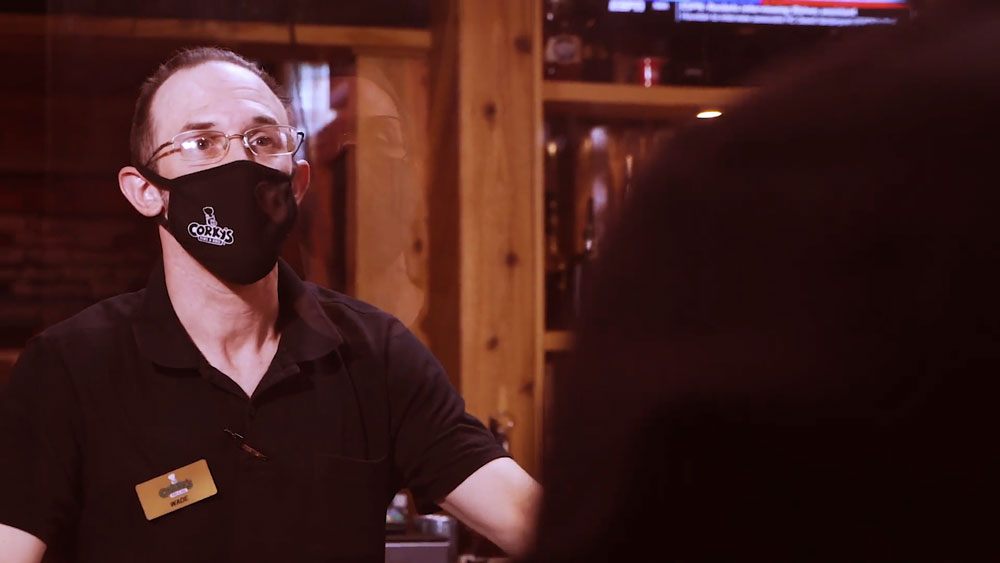
Unless you work with professional actors, most of the corporate videos will be with real people. It is possible that they are confused, anxious, and need some time to settle in. Surprisingly, you can help them give their best. We recommend using a two-camera setup to have some leeway and make your actors look comfortable and sound good.
By using a two-camera setup, you can easily piece together different (the best ones) parts. Plus, you can remove all the awkward pauses while turning nervous muttering into a coherent presentation.
Focus on Sound Quality
Ideally, there shouldn’t be any background echoes and noises when shooting a “talking head.” Your viewers will not enjoy the low sound quality and consider it a piece shot unprofessionally. You must ensure that the voice of the subject is clear and has no disruption.
Like low audio, bad lighting can also come across as low quality and unprofessional. If you have an indoor location, you need key light to shape the subject into a camera interview. The composition of the shots has to be according to the lighting on the location.
Edit the Video
Once you get the desired shots or record the interview, the next step is to edit your video. If you lack professional editing skills, it is better to consult a specialist who can help you cut and short the video coherently. However, to save that extra cost you can opt for user friendly online video editing tools that help you get the perfect result on your own.
Your video must have all the punch lines and impactful parts to help it become the best version
Launch the Video
Not sharing or launching a video on the right channels is one of many businesses’ biggest mistakes. When you share the video, you must remember that your customers interact with the content differently on different marketing channels like YouTube, Instagram, TikTok, and Facebook.

Checklist for a successful video
Establishes Human Connection
As we mentioned earlier, one of the objectives of your video is to show customers the human side of your business. This is where it establishes a human connection with the viewers. Not to mention it is one of the powerful features of a corporate video.
If you want to impress your viewers, it is essential to connect with them. Create a story for your brand that invokes emotion creating a deeper human connection, a great way to do this is creating a testimonial video which will allow your viewers to connect to someone relatable. A short brand video can achieve a similar goal.
Exhibits Authenticity
With the rise of consumer demand for video content, more and more businesses are trying to make their space and impress the audience. But overly produced videos can leave viewers feeling talked at, not talked to. And this is the reason why they feel disconnected.
The significant difference between genuine and less impactful video content is “authenticity.” To meet your target audience’s demands, you need to add something unique and original to share. Your video must have a purpose to bring value to a customer’s life. Your only focus should not be just production values.
Creative Storytelling
Creative storytelling is another crucial aspect you shouldn’t miss out on. You can’t engage your viewers emotionally until there is not something to evoke feelings. You must add an enticing story to your video to allow viewers to relate to it. This is a flexible format and opens up many creative responsibilities. You might not find the same viewership for an interview format as the audience gets bored while listening to the question-answer sessions.
Check out the most viewed content on YouTube, and make them part of your video content strategy. You can also find other video sites like YouTube where you can post your video content.
Wrapping things up
A corporate video works best when the production choices follow a clear communication goal. Decide who the viewer is, what they need to understand, and what action should follow.
Then choose the right format, plan the interviews or scenes, capture clean picture and sound, and build the final edit around the information the audience actually needs.