Get an estimate for your video project in less than a minute.

Get an estimate for your video project in less than a minute.
Cel animation is hand-drawn animation painted on clear sheets called cels and photographed over backgrounds. This page covers how those images became moving scenes, where the cel animation technique came from and why most productions moved away from physical cels. It also explains the difference between the original process and the drawn look you can still use in a modern business video.
| What is cel animation? Cel animation is hand-drawn animation inked and painted on clear celluloid sheets and photographed one frame at a time over a painted background. It was the method behind films like Snow White and the Seven Dwarfs, Pinocchio and Sleeping Beauty. Many productions replaced physical cels with digital ink and paint during the 1990s. |
A simple cel animation definition: a method of making moving images from drawings inked and painted on transparent sheets.
The word cel is short for celluloid. That is why the method is also called celluloid animation. You will also see it spelled cell animation. It describes the clear sheet that carries the finished character or moving object. The transparency lets the background remain visible around the painted area. An animator does not need to repaint the entire setting whenever a character changes position.
The outline is transferred onto the sheet. Paint fills the shapes. A painted background sits beneath the cel and the camera photographs the combined image. The crew replaces or adjusts the artwork before photographing the next frame.
Several cels can share the same picture. A still body might occupy one layer while a moving mouth occupies another. A passing object can sit in front of the character. Their order determines which parts of the picture cover others.
Movement appears when the photographed frames play in sequence. A single animation cel only contains a still pose. The change between poses creates the action you see.
This makes cel animation a physical production method. The final appearance alone cannot prove that a film used cels. Digital drawings can have similar outlines and flat colours without using transparent sheets at all.
If you were to ask me, I would say cel animation is the best technique. It’s a very time consuming animation style, but the results can literally blow your mind. These are the types of videos I grew up watching and they still look amazing today.
Cel animation names a physical process while traditional animation and hand-drawn animation describe broader approaches to creating movement through drawings.
The terms overlap because many familiar drawn films used painted cels. In casual conversation someone may use all three names for the same film. That is understandable. It is less useful when you need to describe how a new video will actually be made.
Hand-drawn work can begin on paper or a digital drawing surface. The defining feature is that an artist creates the drawings. Those drawings do not have to be transferred onto transparent sheets.
Traditional animation usually refers to the drawn approach developed before computer-generated character animation became widespread. It can still include digital colouring and assembly. The label does not guarantee a fully physical workflow.
For a production brief we would separate the desired appearance from the method. A request for a cel animation style might mean expressive drawing and flat colour. A request for painted physical cels means a much more specific process with different handling and revision needs.
The videos below show cel animation being made. They run from Disney in the 1930s to TV anime and The Simpsons. Each one shows a different part of the process covered above. Look for the same core steps in every clip. Drawings start on paper. They are inked onto cels and painted on the back. Then the layers are photographed over a background.
1. How Walt Disney Cartoons Are Made (1938)
Disney made this short to promote Snow White and the Seven Dwarfs. It follows the studio pipeline from story sketches to the camera. Watch the ink and paint stage closely. Inkers trace each pencil drawing onto a cel. Painters then fill in the colours on the back. This upload is a shortened classroom edit of the original film.
2. Walt Disney Explains the Multiplane Camera (1957)
Walt Disney demonstrates the multiplane camera in this TV segment. The camera holds layers of artwork on separate sheets of glass. Each layer sits at a different distance from the lens. Moving the layers at different speeds creates a sense of depth. This is the effect behind the layered settings in Pinocchio.
3. Akira: The Animation and Colouring Process (1988)
Akira is a feature-length anime made with hand-painted cels. This clip covers its animation and colouring stages. It shows how much manual work went into a feature before digital ink and paint. Compare its detailed colour work with the TV production in the next example.
4. How Dragon Ball Z Was Made
Dragon Ball Z is a familiar example of cel-era TV anime. This video follows one episode from the storyboard through in-betweening and beyond. It helps explain why TV studios relied on limited animation. Held poses and reused cels made a weekly schedule possible.
5. The Simpsons Cel Animation Process (2000)
This clip comes from the 2000 documentary America’s First Family. Simpsons director Steven Dean Moore walks through the process. It also shows cels being painted at AKOM, a studio in South Korea. The series moved away from cels in Season 14. It shows that a major Western TV series still used cels into the early 2000s.
6. Disney’s Last Ink and Paint Artists (Today)
This video from The Academy follows four artists who still ink and paint cels at Disney. Inkers trace the animator’s lines on the front of each cel. Painters fill in the colours on the back so the lines stay clean. The craft now serves fine art and archival pieces rather than film production. It gives a close-up look at the hand work behind every example above.
The cel animation process turns planned drawings into painted layers that a camera photographs in sequence.
Storyboard. The storyboard sets out the action as a sequence of scene drawings. It establishes what happens and where the viewer looks. A clear board gives the animation team a shared plan before they commit to finished drawings and paint. It also reveals whether a scene needs a different composition to make the action readable.
Key poses. Animators draw the important positions within an action. A jump might need a crouch, a launch and a landing. These poses establish the performance and direction of movement. They need to make sense as a sequence before the gaps are filled. Strong individual drawings cannot rescue an action with unclear intent.
In-betweens. An in-between is a drawing that connects key poses. These drawings control how the character travels from one important position to another. Their spacing affects the apparent speed. Closely spaced positions create a different feeling from large jumps across the picture. The aim is controlled movement rather than simply adding more drawings.
Ink and paint. Approved drawings are transferred onto cels and coloured. Clean outlines and consistent colours keep the character recognizable across successive images. Each sheet must align with the others. A small unwanted shift can become visible once the images move. Finished paint also needs careful handling before photography.
Layering over backgrounds. The crew places the cels over the painted setting. Separate layers can hold characters, moving details and foreground elements. Their arrangement creates the finished composition. Keeping the background separate avoids repainting it for every change in the character. Registration holds the layers in their intended positions.
Filming. A rostrum camera photographs artwork on a fixed stand. A multiplane camera separates artwork across different physical levels to create depth during movement. The crew records each planned image in sequence. Careful exposure and alignment keep the picture consistent from frame to frame. The photographed images become the moving scene.
Cel animation history begins in the early twentieth century. The method developed as a way to separate moving drawings from backgrounds.
Before that separation became practical, changing an animated figure could involve recreating much more of the image. Clear sheets allowed a painted setting to stay in place while the moving artwork changed. That division became central to studio production. Different parts of a scene could be prepared separately and brought together for photography.
Disney’s feature work expanded the scale and complexity of drawn animation. Painted backgrounds, expressive characters and carefully staged scenes worked together across longer films. The multiplane camera helped create depth by placing artwork on separate levels. Moving those levels relative to one another made foreground and distant elements behave differently in the image.
Television created another production environment. Recurring characters and regular schedules encouraged methods that reused artwork and concentrated movement where it mattered most. A held body could support a changing mouth or expression. The results helped establish a distinct visual rhythm for many television cartoons.
During the 1990s digital ink and paint replaced physical cel colouring in many productions. Drawings could still begin by hand. Their outlines and colours were then assembled as digital images instead of photographed sheets.
The change did not erase the craft of drawing movement. It changed how that work was finished. That distinction explains why a modern film can belong to the hand-drawn tradition without being a physical cel production.
Limited animation reduces the amount of newly drawn movement through held poses, reused artwork and selective changes within a scene.
A character might remain still while only the mouth moves. A walking sequence might repeat. The background might pass behind a character instead of requiring a completely new drawing for every position. These choices concentrate the drawing effort on the part of the action that needs attention.
Television studios used this approach to manage the workload of recurring programmes. Fewer unique drawings could make production more practical within the available schedule and budget. The method also influenced the finished style.
Strong poses, graphic compositions and carefully timed expressions can carry a scene with relatively little movement. Many classic cartoons and anime use that economy deliberately. A held image can make an upcoming action feel stronger by contrast.
Limited does not mean that no judgment is involved. The animator still needs to choose what moves and when. Movement that is scarce but well placed can communicate more clearly than a scene where every element shifts without purpose.
Physical cel animation is uncommon because digital colouring and assembly remove much of its material handling and make changes easier.
Hand-painted cels require sheets, paint, storage and camera work. The artwork must stay clean and properly aligned. A damaged sheet or an incorrect colour can mean redoing a physical element. Those demands sit on top of the drawing work already needed to create the movement.
Digital finishing allows the same drawing to be coloured and placed against a background without transferring it onto a clear sheet. Changes can happen within the image files. The team does not need to repaint a cel and photograph the scene again just to alter a colour.
That flexibility matters when a production contains many scenes. Consistent colours and layer order can be checked across the work. Moving or replacing an element is easier to manage when its parts remain separate.
The word uncommon matters here. Physical cels have not become impossible to use. They are simply no longer the usual choice for a drawn commercial production.
Many productions still depend on drawings made by hand. The part that changed was often the ink, paint and camera stage. A digital finish does not tell you that the character performance was generated without an artist drawing it.
Yes, hand-painted cel animation can still appear in small artistic productions and special sequences. But it is a specialist choice.
A project may want the physical process itself to be part of the work. Painted sheets and photographed artwork can introduce qualities that the makers choose to preserve. That is different from using digital methods to imitate the appearance of older cartoons.
Many anime productions retain a drawn look while using digital colouring and assembly. The visible line work does not prove that physical cels were involved. You need production information to make that distinction accurately.
Studio Ghibli is a useful example of why the terms need care. Its hand-drawn practice continued while digital ink and paint became part of production from the late 1990s. Calling all of that later work physical cel animation would be misleading.
For your own video the useful question is what you want to see. If the goal is expressive outlines and painted-looking backgrounds, digital finishing can support that. If physical cels are essential, the brief needs to say so explicitly.
Traditional 2D cel animation uses painted physical sheets while digital 2D animation assembles its artwork electronically.
The finished look can overlap. Both can show expressive outlines, flat colours and carefully drawn movement. Texture and line variation come from design decisions as well as the material used to finish the image. A digital scene does not have to look perfectly smooth or mechanically uniform.
The workflow differs more clearly. Physical cels require transfer, paint, layering and photography. Digital artwork can be coloured and combined directly. A drawn character may still begin with the same attention to poses and motion in either approach.
Changes are usually more flexible in digital work. A separate colour or background layer can be adjusted without replacing a painted sheet. That does not make every revision quick. Changing an entire action can still require new drawings.
Cost follows the actual work. Physical materials and camera handling add tasks to a cel production. Detailed digital drawing can still be labour intensive. Comparing cel animation vs digital only by appearance misses those differences.
We would define the look first and then identify what the process needs to preserve. If the visible result matters more than the physical method, digital 2D can offer the drawn character you want with a more adaptable finishing stage.
The cel look in modern video comes from drawn outlines, controlled colour areas and movement that feels deliberately animated.
A brand can use those qualities without commissioning physical cels. Slight variation in the line can make a character feel drawn. Painted-looking backgrounds can support a softer image. Carefully chosen poses can give a short action personality without filling the screen with detail.
The look can also appear in 3D. Cel shading is a surface treatment that gives 3D models flat-looking colour bands and illustrated edges. The underlying model still has depth even when the image resembles a drawing.
These approaches suit different kinds of movement. A drawn face may need flexible expressions. A modeled object may need to turn continuously while keeping an illustrated finish. The visual direction should make those choices feel connected.
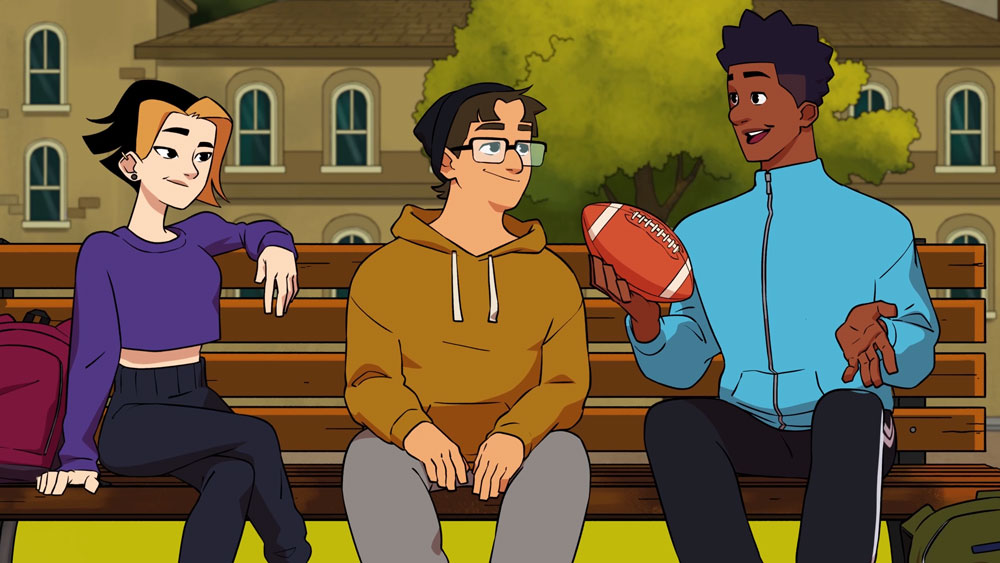
The line treatment and movement determine how close the result feels to drawn cel work. Flat colours alone do not reproduce that character. The animation needs to support the chosen appearance.
Famous cel animation examples include drawn feature films and television series made with photographed painted artwork.
These examples share a physical production tradition without sharing one identical visual style. The technique allowed very different drawing choices to reach the screen.
These answers distinguish the original cel process from the drawn appearance used in later work.
Cel animation uses drawings painted on transparent sheets and photographed over backgrounds. The sheets change between frames to create movement. Separate layers allow a character to move without repainting the entire setting. A film that looks hand-drawn may use this process. But it may also use digital colouring and assembly instead.
It is called cel animation because the artwork is carried on clear sheets known as animation cels. The name comes from celluloid. The transparent surface lets the background show around painted characters and objects. Cel describes the material stage of the process rather than a particular character design or a single style of drawing.
Physical cel animation is uncommon because digital finishing makes colouring and assembly more practical. Painted sheets require material handling and photography. Digital layers can be changed without repainting and reshooting physical artwork. Artists may still draw the movement by hand. The shift away from cels does not mean that hand-drawn animation disappeared.
Studio Ghibli’s hand-drawn reputation should not be treated as proof that its later films use physical cels. Digital ink and paint became part of its process from the late 1990s. Drawn animation and digital finishing can exist together. The accurate description depends on the particular film and its documented production method.
Yes, the original Dragon Ball Z television series used cel animation. Each anime cel from the show was painted by hand and photographed over a background. Later releases and related productions should be considered separately. A familiar character design does not prove that every version used the same materials or the same method of finishing the images.
Cel animation finishes drawings on physical sheets for photography. Digital animation finishes or creates images electronically. Digital 2D can preserve hand-drawn lines and movement. Digital 3D uses models with depth. These are different production choices. The appearance of a finished scene alone may not reveal which steps were physical and which were digital.
Limited animation reduces newly drawn movement by holding poses and reusing selected artwork. A mouth may move while the rest of a character stays still. Careful timing and strong compositions help those choices read clearly. The method can reduce the drawing workload and also create a deliberate visual style with selective moments of action.
Yes, digital 2D can create the drawn outlines and controlled colours associated with cel work. The brief should describe the line quality, texture and movement you want. Our guide to animation styles can help you distinguish that appearance from other approaches. Physical cels are a separate production requirement that needs explicit discussion.
Cel animation describes a physical method built around painted transparent sheets. The drawn look associated with it can still be created through modern production methods. Decide whether you need the material process or the visual character. That distinction gives your brief a clear direction and helps us discuss the drawing, movement and finish without confusing an older production technique with a single style.


Larry is the Founder and Producer at Mammothic Films, with more than 15 years of production experience. He leads a team that creates story-driven videos for businesses and brands. A marketer, designer, and animator, Larry has overseen the production of more than 1,500 videos for Fujitsu, Logitech, Warner Brothers, NFL, Blockdaemon, Astronomer, Canonical, and 370+ other companies in Canada, the United States, and around the world.
Larry is a devout Christian who believes in placing God first, and that everything else is a blessing that comes from serving Him. When he’s not working, he’s hanging out with his wife and three kids, playing the piano, or sightseeing.
We use cookies to improve your experience on our site.
Manage your cookie preferences below:
Essential cookies enable basic functions and are necessary for the proper function of the website.
