Get an estimate for your project in 60 seconds. No email required.

Get an estimate for your project in 60 seconds. No email required.
To answer “what is 2D animation” we start with movement created in a flat space with height and width rather than modeled depth. This page covers the main types, how to create 2D animation step by step and the uses that suit the format. It also looks at familiar examples and the decisions that affect cost so you can judge whether the approach fits your video.
 By
Larry Mutenda
By
Larry Mutenda | What is 2D animation? 2D animation creates movement from drawings or flat shapes that have height and width but no modeled depth. The main types are frame by frame, rigged vector, motion graphics, cutout, whiteboard and rotoscoped 2D. The Lion King, My Neighbor Totoro and The Simpsons are well-known 2D examples. Brands use it for marketing, training and product videos. |
2D animation creates the appearance of movement through drawings or shapes arranged in a space with height and width. Each image is flat. A character can still appear to move toward you or turn away. The artwork represents that change through its size and shape. There does not need to be a complete digital body behind the visible drawing.
The images play at a chosen rate. Frames per second means the number of displayed images in each second. A 2D animator can change the drawing on each frame or hold an image across several frames. The timing of those changes affects how the motion feels.
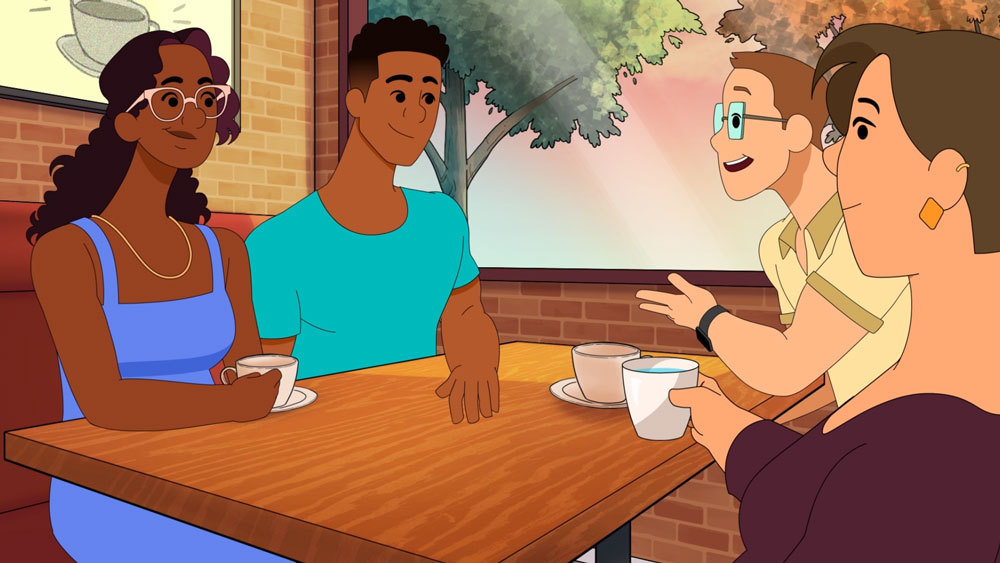
Artwork can be drawn directly or built from vector shapes. Animation built from vector shapes is often called vector art animation. Vector shapes use defined paths to describe their edges. They can keep a clean outline as their size changes. Both approaches can support expressive movement.
Flat does not mean visually empty. A scene can contain detailed backgrounds and convincing perspective. Objects can overlap and cast illustrated shadows. Those choices create an impression of depth within the image. The defining feature is how the elements are constructed. A 2D scene can look rich and dimensional. It remains different from a 3D scene built around models that a virtual camera can view from changing positions.
2D animation is my favorite style. At any given time, my team and I at Creamy Animation are working on a 2D video. It’s also the style I recommend to our clients most often because it gives us so many ways to make a message clear. We can show a customer’s problem, demonstrate how a product works, or take viewers through a process step by step. A character’s expression, a change in the scene, or a simple visual cue can help someone understand an idea that would take much longer to explain with text and graphics alone. And because we design the artwork around the client’s brand, each video can have its own look and feel.
2D animation is used to communicate stories and information through controlled drawings, text and graphic movement.
An illustrated world can express a brand’s character without needing a filmed location. The style should support the message rather than compete with the product or service being described.
Diagrams and characters can show a process one part at a time. The viewer can focus on the step that matters without the distractions of a busy real environment.
Simplified views can highlight the relevant action. You do not have to show every detail at once. The sequence still needs to represent the actual product accurately.
Bold shapes and concise text can keep the main idea visible in a small frame. The action needs to make sense quickly without relying on fine background detail.
Drawn characters can sustain expressive performances across a story. Design and timing create a consistent world even when the action is far removed from physical reality.
Animated characters and interface elements can respond to player actions. Clear silhouettes and readable movement help the viewer understand a change in state. Hollow Knight and Cuphead are two well-known games built on hand-drawn 2D art.
Short animations can show what a product does on a landing page or guide new users through their first steps. They need to load fast and stay simple so they do not slow the page down.

2D animation can show the inside of the body, how a treatment works or a process too small to film. The drawings need to be checked against approved reference material so the picture stays accurate.
These uses share a practical advantage. You choose exactly what belongs in the image and when it appears. That control is useful whenever a real camera would capture more information than the viewer needs for the particular point.
The main 2D animation types differ in how the artwork is created and how its movement is controlled.
Traditional animation creates movement through successive drawings. An artist changes the pose or shape between images. Frame by frame animation can support flexible expressions and actions that would be difficult to achieve with fixed parts. The work may be drawn on paper or as 2D digital animation. The important distinction is the creation of new drawings for the movement rather than simply moving a finished illustration across the screen. Disney’s Snow White and the Seven Dwarfs (1937) was drawn and painted this way, one frame at a time.
2D vector animation often uses connected shapes arranged as a digital puppet. A rig is the set of controls that moves those parts. The animator can rotate a limb or change a face through the available controls. This makes repeated 2D character animation practical. The design still needs to suit the required actions. A rig built for front-facing gestures may need new artwork for a full turn.
Motion graphics animates text, symbols, diagrams and other graphic elements. The movement helps organize information or show a relationship. A line can connect stages of a process. A number can change as a comparison develops. Characters are not essential to the approach. Clear timing and composition matter because the viewer needs to read the information while the scene continues to move.
Cutout animation moves separate flat pieces to create a character or scene. The pieces can be physical artwork or digital elements. A limb may rotate around a joint while the body remains still. The segmented construction can be visible as part of the style. It suits an illustrated approach where the movement should feel graphic rather than imitate a fully modeled body in space. South Park is a well-known example. The show began with real construction paper and now uses software to keep the same cutout look.
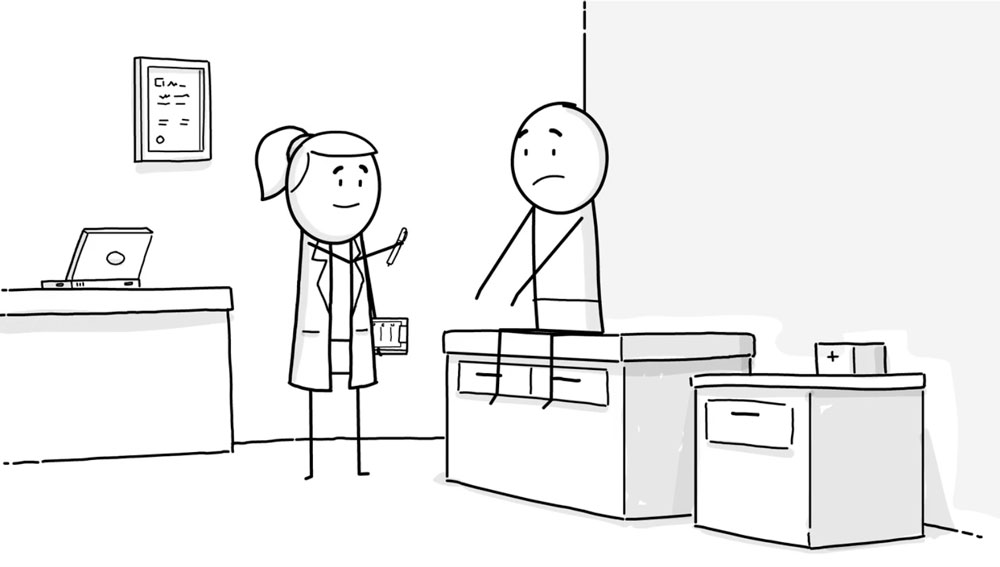
Whiteboard animation reveals drawings as though they are being added to a board. The order of the drawing helps guide attention through an idea. A viewer sees the image develop alongside the spoken or written explanation. The effect needs a clear sequence. Filling the board with unrelated drawings can make the message harder to follow even when each individual image is simple.
Rotoscoped 2D uses filmed movement as the basis for animated drawings. An artist follows the positions in the footage and chooses a visual treatment. The result can preserve a recognizable human gesture while simplifying the person into lines and colour. It does not remove the need for drawing decisions. The artist still needs to keep forms consistent and decide which details belong in the finished sequence. Richard Linklater’s Waking Life and A Scanner Darkly were both animated over filmed actors.
We make a 2D animated video by agreeing on the message and artwork before building the finished movement and sound.
Brief. Define the viewer and the action the video needs to support. Identify the information that must be accurate. A clear brief gives every later choice a purpose instead of asking the animation to carry an unfocused message.
Script. The video script establishes what is said and what is shown. Spoken words and visible action need to work together. The script should not ask the viewer to read one message while hearing a different complicated point.
Storyboard. A storyboard maps the scenes as drawings. It shows the order and composition before movement is built. This is where we check whether the visual explanation follows a clear path from one idea to the next.
Style frames and design. Finished still images establish the intended look. Characters and backgrounds need to support that direction throughout the video. Approving the design here avoids treating animation as a test of an undecided visual style.
Voiceover. The recorded voice establishes the pace for spoken sections. Its pauses need room for the pictures to make sense. A script that reads comfortably on the page may need adjustment when spoken at a natural speed.
Animation. We create the movement using the agreed artwork. Timing controls where your attention goes. A scene may need a hold so a label can be read before the next object moves into place. Animators set the key poses first. The frames between those poses are then drawn by hand or generated by the software for rigged and vector artwork.
Sound design and music. Individual sounds support actions and transitions. Music sets a rhythm without obscuring the voice. The combined track needs to feel intentional at ordinary listening levels.
Revisions and delivery. We review the complete sequence and address agreed changes. The final files need to suit their destinations. The last check includes readable text and a picture that holds together at the intended screen size. Most videos are delivered as MP4 or MOV files. Short loops can be GIFs, and animations for websites and apps can be exported as Lottie files.
Most 2D animation is made with a few professional programs. Each one suits a different way of working.
Toon Boom Harmony is used by many TV and film studios. It handles frame by frame drawing and rigged cutout characters in the same project.
Adobe Animate is vector-based animation software. Animators can draw each frame or move shapes between key poses with tweens.
Moho is built around rigging. Artists attach bones to a character so they can pose it without redrawing every part.
Adobe After Effects is the standard tool for motion graphics. It is used to animate text, shapes and illustrations, and to combine the final layers.
2D animations use flat artwork while 3D uses models that occupy a digital space with depth.
A 2D character turns because its drawings or component shapes change. A 3D character can be viewed from different positions because its form exists beyond the current camera view. Both methods can produce stylized images. Neither is automatically realistic or simple.
For a buyer the choice follows what the video needs to show. A graphic idea may work clearly with flat shapes. A product that must turn and reveal its surfaces may suit a model. The workload depends on the detail and movement in the actual brief.
The full comparison has its own page: 2D vs 3D animation. That page looks more closely at process, cost and timing. Here the main distinction is the construction of the image and the kind of visual information you need it to carry.
The history of 2D animation runs from sequential drawings and early film to hand-drawn features, television and digital production.
Flipbooks demonstrate the basic idea. A series of slightly changing drawings appears to move when viewed in quick succession. Early filmmakers applied that relationship to photographed images. The camera provided a way to record and replay a controlled sequence of artwork.
Hand-drawn features expanded the method into longer stories. Characters needed consistent designs and readable performances across many scenes. Painted backgrounds and separate moving layers helped create larger worlds without redrawing every part of every image.
Television brought different schedules and production demands. Reused poses and selective movement made recurring programmes more practical. Those methods also shaped recognizable 2D animation styles. A strong held expression could carry a scene while only a small element moved.
Digital tools changed the handling of artwork. Drawings could be coloured and combined electronically. Flat shapes could be connected into movable puppets. The final image no longer required physical cels to pass under a film camera.
The central task remained the same. An animator chooses the changes between images so the viewer perceives meaningful movement. New finishing methods widened the options without removing the need for clear drawing, design and timing.
Familiar 2D animation examples include drawn feature films and television series with distinct approaches to design and movement.
The Lion King in its hand-drawn form shows expressive character poses against detailed environments. The drawing can simplify a gesture while keeping the action readable.
My Neighbor Totoro uses clear character shapes within painted settings. Quiet holds and small movements contribute to the performance as much as larger action.
The Simpsons shows how 2D cartoon animation can support recurring television characters with a consistent graphic design. A recognizable face remains clear across changing expressions and compositions.
Spirited Away combines drawn character performance with a richly designed world. Its overall production also illustrates why an animated film can involve more than one technique.
These examples are useful visual references rather than direct comparisons for a commercial budget. A business video needs its own level of detail and movement.
These references show different ways to use line work and pacing. A clear character design can support quiet moments as effectively as more elaborate movement.
The cost of 2D animation depends on the finished length, visual style, character work and animation method. Our 2D animation starts at $5,000 for a 60 to 90 second video. A useful quote needs to describe the scenes and deliverables behind that figure.
Simple moving shapes require different work from detailed characters interacting. More characters mean more designs and performances to manage. A style with elaborate lines can also increase the amount of drawing that must stay consistent.
Frame by frame work creates new drawings through the action. Rigged work moves connected parts through controls. Either can become complex when the movement demands it.
Length adds work. But it is not the only measure. A short sequence with a detailed turn can take more effort than a longer scene built around a held composition. We would price the actual action and design rather than assume every second has the same workload.
These answers explain the main choices that affect a 2D video brief.
2D animation creates movement using drawings or flat graphic shapes. The elements have height and width rather than modeled depth. Perspective and layers can still make the image feel dimensional. Movement comes from changing drawings or controlling separate parts over time. The result can be simple and graphic or detailed and expressive.
2D animation is used for marketing, training, entertainment, product communication and games. It is useful when you need control over exactly what the viewer sees. A diagram can isolate a process. A character can demonstrate an idea without a real location. The format works best when the visual treatment supports a clear communication task.
The main approaches include frame by frame drawing, rigged vector work, motion graphics, cutout work, whiteboard sequences and rotoscoped drawing. They differ in how the images and movement are built. A single video can combine methods. The choice should follow the required action and appearance rather than the appeal of a technique’s name.
2D animation uses flat artwork while 3D uses models with depth. A drawing can suggest a turning object through changing views. A modeled object can be viewed by moving a virtual camera around it. Both can be stylized. The useful distinction is how the scene is constructed and how its visual information is produced.
Neither is easier overall. 2D depends on strong drawing and timing. 3D needs modeling, rigging and lighting before any animation starts, but those models can be reused later. The easier choice depends on what your video needs to show.
The term 4D animation has no single standard meaning in a general video brief. It may refer to a three-dimensional sequence changing over time or to a screening with physical effects. It does not automatically describe a separate visual format beyond 3D. Ask what the supplier means before treating the label as a production requirement.
Yes. 2D animation is used every day in marketing videos, training, TV series, games and apps. Digital tools have made it faster to produce than traditional hand-drawn work. That keeps it one of the most common animation styles for business videos.
The schedule depends on design complexity, movement and the approval process. A simple graphic sequence has a different workload from detailed character acting. A 60 to 90 second 2D video typically takes 4 to 8 weeks. The brief should identify the required scenes and review stages before a delivery date is confirmed against the planned production work.
Our 2D animation starts at $5,000 for a 60 to 90 second video. The final quote depends on length, design detail and the amount of character movement. Frame by frame drawing and reusable puppet work involve different tasks. A useful comparison needs the same scope and deliverables. A price without those details does not describe the finished video adequately.
2D animation gives you direct control over drawings, text and movement. Choose it when a clear graphic treatment serves the idea better than filming or modeling every detail. The right method depends on the action and the look you need. A focused brief lets us build the design around that purpose and estimate the work required to turn it into a finished sequence.


Larry is the Founder and Producer at Mammothic Films, with more than 15 years of production experience. He leads a team that creates story-driven videos for businesses and brands. A marketer, designer, and animator, Larry has overseen the production of more than 1,500 videos for Fujitsu, Logitech, Warner Brothers, NFL, Blockdaemon, Astronomer, Canonical, and 370+ other companies in Canada, the United States, and around the world.
Larry is a devout Christian who believes in placing God first, and that everything else is a blessing that comes from serving Him. When he’s not working, he’s hanging out with his wife and three kids, playing the piano, or sightseeing.
We use cookies to improve your experience on our site.
Manage your cookie preferences below:
Essential cookies enable basic functions and are necessary for the proper function of the website.