Get an estimate for your project in 60 seconds. No email required.

Get an estimate for your project in 60 seconds. No email required.
Here’s all you need to know about what 2.5D animation is and why it is widely used in marketing and entertainment.
| What is 2.5D animation? 2.5D animation is a motion design technique that places flat 2D artwork on layers at different depths and moves a virtual camera through them. The artwork stays two-dimensional. Parallax, scale and perspective create the look of a 3D space. It adds depth to marketing and product videos without full 3D modelling. |
In motion design, 2.5D animation usually means arranging flat artwork in layers, placing those layers at different depths, and moving a virtual camera through the scene. The artwork stays two-dimensional. The spacing, scale, perspective, and parallax are what create the impression of a three-dimensional environment.
It’s a practical option for animated videos, product stories, and marketing content when you want something more dynamic than standard 2D, but don’t need the cost or production time of full 3D.

At Mammothic Films, we often use 2.5D when a project needs a more visually immersive video without adding unnecessary complexity. In this article, I’ll walk through what 2.5D animation is, how it works, and when you should use it.
The short answer: 2.5D keeps the artwork itself flat. What changes is that the scene gets separated into layers, and those layers are positioned and animated at different depths using a virtual camera. The result reads as three-dimensional, but the individual assets remain flat layers rather than fully modelled 3D objects.
This animation style begins with flat 2D artwork that’s separated into foreground, middle ground, and background layers. A virtual camera then moves through the scene, and the layers shift at different speeds. Closer layers move faster than distant ones, which is what creates the sense of depth.
Traditional 2D mostly moves on the horizontal and vertical axes. 2.5D also introduces movement along the z-axis, so objects appear to move closer or farther away. You’ll commonly see this in video commercials, marketing videos, and animated content where a project needs more visual depth without the cost of full 3D. 2.5D animation is also known as pseudo-3D: a technique that creates the impression of three-dimensional space within a two-dimensional environment.
Traditional 2D animation isn’t limited to left-right and up-down movement, and it doesn’t require one fixed front-facing angle. Animators can draw changes in scale and perspective, simulate camera movement, and use multiplane techniques to create depth while still producing 2D animation.
The real difference is the production method. In conventional 2D animation, changes in perspective and depth are drawn into the artwork itself. In a common 2.5D workflow, already-flat elements are separated and positioned at different depths so a virtual camera and parallax can create the spatial movement instead.
We created the 2.5D animated videos below using a mix of Adobe tools like Illustrator, Photoshop, and Animate. To build the depth, we separated the artwork into layers and moved an After Effects camera through the scene.
ChartLamp needed a way to walk viewers through its product story without the cost of a full 3D build. We separated the illustrated scene into foreground, middle ground, and background layers, then moved a camera through them so the story could flow from one idea to the next. The extra depth held attention through a longer explanation, and because the artwork stayed flat, we didn’t need to model, light, or rig anything in 3D.
This was built as a short podcast opener, so it needed to grab attention fast. A layered camera move gave the intro a sense of motion in just a few seconds. Before animating, we had to plan how far the camera would travel so we knew how much background artwork to extend beyond the original frame. Skip that step and the camera runs out of scene to move through.
The Big Ben sequence from The Great Mouse Detective is an early example of hand-drawn character animation combined with computer-generated dimensional elements. The clockwork gears were designed as computer wireframes, transferred to cels, and integrated with the traditionally animated characters. It’s better described as a 2D/3D hybrid than as the same layered After Effects process used in the ChartLamp and Robot Breakfast examples above.
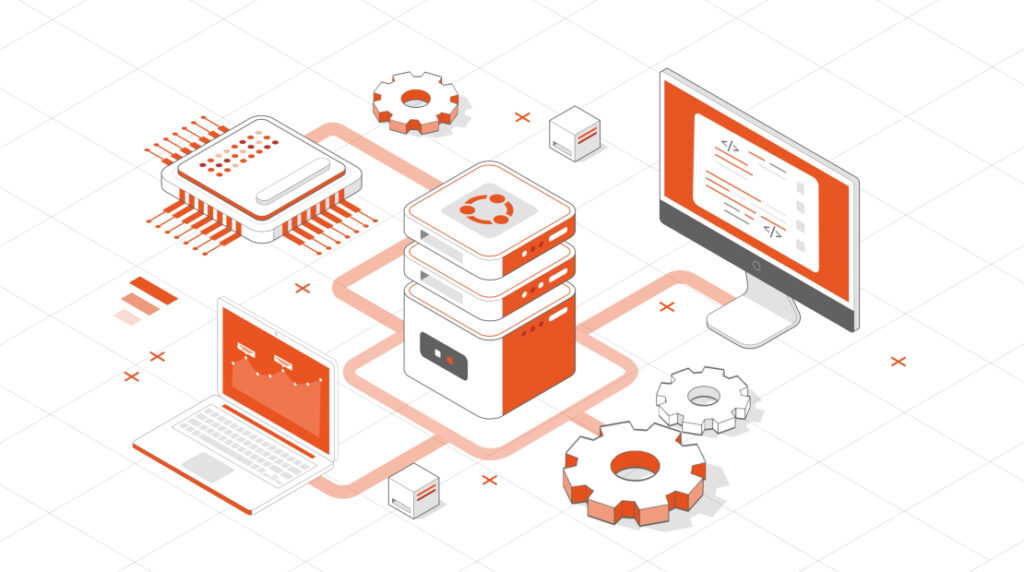
We’ve already explained how 2.5D animation works. So, in 3D animation, everything is built as actual three-dimensional models in a virtual 3D space. You work with real geometry, lighting, textures, and cameras that move through a fully modeled environment.
That gives you maximum flexibility and realism, but it also requires more time, a bigger production pipeline, and often a larger budget.
Watch for the flat illustrated layers and the camera moving between them. Parallax, where the foreground shifts faster than the background, is the sign of a 2.5D construction rather than a fully modelled scene.
Here the camera moves freely around fully modelled objects, with lighting, texture, and shading that respond from every angle. That range of movement is evidence of true 3D geometry rather than flat layers.
| Feature | 2D animation | 2.5D animation | 3D animation |
|---|---|---|---|
| Core assets | Drawn or designed in two dimensions | Flat assets arranged at different depths | Three-dimensional models and environments |
| Depth | Drawn or simulated within the artwork | Created through layer spacing, perspective, camera movement, and parallax | Built into the geometry of the scene |
| Camera | Can be drawn or simulated | Moves around or through flat planes, within limits | Can move through a fully modelled environment |
| Best suited to | Illustration-led stories and graphic motion | Layered scenes, stylized product stories, photo animation, spatial diagrams | Products, environments, and actions needing true volume or multiple viewpoints |
| Main limitation | Depth changes may require redrawing | Extreme angles expose the flat construction | More modelling, rigging, texturing, lighting, and rendering may be required |
This is a practical comparison, not a rigid rule. Many productions combine all three methods.
2.5D often requires less modelling, texturing, rigging, and rendering than full 3D. But cost still depends on scene count, artwork preparation, camera complexity, compositing, revisions, and delivery requirements. It isn’t automatically cheaper.
The camera move has to be planned before the artwork is finished. If a foreground object covers part of the background, we may need to draw the hidden area so it’s still there when the camera shifts. That’s one of the details clients rarely see, but it determines how far we can move through the scene without exposing the effect.
2.5D adds camera movement and spatial depth while preserving the look of illustrated artwork. It’s useful when a story benefits from movement through a scene but doesn’t need fully modelled 3D assets.
If you’re curious about how 2.5D could work for your next marketing video, animated video, or brand story, let’s talk. Contact us today and we’ll walk through how we can bring your vision to life with 2.5D animation.


Larry is the Founder and Producer at Mammothic Films, with more than 15 years of production experience. He leads a team that creates story-driven videos for businesses and brands. A marketer, designer, and animator, Larry has overseen the production of more than 1,500 videos for Fujitsu, Logitech, Warner Brothers, NFL, Blockdaemon, Astronomer, Canonical, and 370+ other companies in Canada, the United States, and around the world.
Larry is a devout Christian who believes in placing God first, and that everything else is a blessing that comes from serving Him. When he’s not working, he’s hanging out with his wife and three kids, playing the piano, or sightseeing.
We use cookies to improve your experience on our site.
Manage your cookie preferences below:
Essential cookies enable basic functions and are necessary for the proper function of the website.