Get an estimate for your video project in less than a minute.

Get an estimate for your video project in less than a minute.
The best AI commercials start with an advertising idea worth producing. These 12 examples show how brands have used AI for visual storytelling, personalized messages and production challenges, along with the decisions that deserve closer scrutiny.
| What are the best AI commercials? The best AI commercials to study include Heinz’s “A.I. Ketchup,” Nike’s “Never Done Evolving” and Coca-Cola’s “Masterpiece.” Heinz used generated imagery to reinforce brand recognition. Nike used machine learning to compare Serena Williams across eras. Coca-Cola combined AI with other production techniques to connect its product with art. |
After more than 16 years producing videos, I still judge a commercial by a straightforward question: what will the viewer remember about the brand? A surprising image can earn attention. A commercial also needs to connect that attention to a product, a promise or a reason to act. That distinction matters when reviewing AI-generated ads. A production breakthrough and an effective advertisement are different achievements.
This selection includes commercials and broader advertising films released through October 2026. Some use generated footage extensively. Others apply AI to one part of a larger production. The useful lesson is understanding why each approach suited the idea.
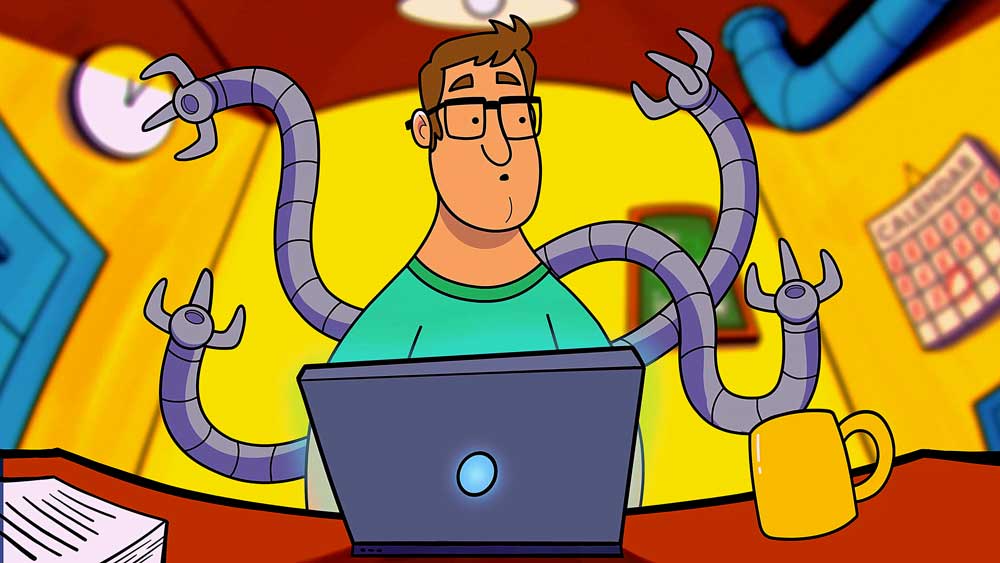
Here’s an AI commercial we produced for Cozy Plumbing, a plumbing company. It uses stop motion animation.
Stop motion and character animation used to cost tens or even hundreds of thousands of dollars. Sets, puppets and props had to be built by hand. Every movement was shot frame by frame. That put animated commercials out of reach for most small businesses.
AI changes that math. It can generate scenes, characters and motion that once took weeks of studio time. Animated commercials are now faster to make and cheaper to produce. Local businesses can use them, not just national brands. The idea still matters most. A producer still decides what the viewer should remember, what must look right and how the final cut fits the brand.
Want an AI commercial for your business? Tell us what you sell and who you need to reach. We will show you what AI animation can do for your budget.

“AI-led visuals” means generated imagery plays a substantial role. It does not mean the commercial was made without human direction, editing or finishing.
| # | Brand | Commercial or campaign | Year | Release context | Documented AI use |
|---|---|---|---|---|---|
| 1 | Heinz | A.I. Ketchup | 2022 | Social and wider advertising campaign | Generated images |
| 2 | Nike | Never Done Evolving | 2022 | Digital film and simulated match | Machine learning and digital recreation |
| 3 | Coca-Cola | Masterpiece | 2023 | Global brand campaign | AI-assisted visual effects |
| 4 | Kalshi | World Gone Mad | 2025 | NBA Finals advertising | AI-led video generation |
| 5 | Toys“R”Us | The Origin of Toys“R”Us | 2024 | Cannes Lions premiere and online release | Generated video with production finishing |
| 6 | Under Armour | Forever Is Made Now | 2024 | Anthony Joshua brand campaign | AI-assisted production using existing assets |
| 7 | Coca-Cola | Holidays Are Coming | 2024 | Global holiday campaign | AI-led visual reinterpretations |
| 8 | Coca-Cola | Holidays Are Coming | 2025 | Global holiday campaign | Two AI-driven reinterpretations |
| 9 | SVEDKA | Shake Your Bots Off | 2026 | Super Bowl LX | AI-led character animation and imagery |
| 10 | Cadbury | Shah Rukh Khan-My-Ad | 2021 | Localized advertising in India | Synthetic face and voice personalization |
| 11 | Virgin Voyages | Jen AI | 2023 | Digital invitation campaign | Personalized AI video invitations |
| 12 | Lexus | Driven by Intuition | 2018 | Lexus ES advertising film | AI-written script with human-directed filming |
We selected brand-released campaigns with documented AI involvement and a production decision worth examining.
The list favors identifiable work over speculative commercials made independently using another company’s logo. Those experiments can demonstrate technical skill, but they do not establish that the brand commissioned or approved the advertisement.
We considered four questions:
The order reflects our editorial assessment of what is useful to study. It is not a ranking of sales performance. Where campaign owners report results or awards, we identify that source.
Heinz’s “A.I. Ketchup” used generated images to reinforce the brand’s association with the ketchup category.
The campaign explored what an image generator produced when asked to depict ketchup. Its creative premise was that the results frequently resembled familiar Heinz packaging. Generated images became the material for a broader advertising campaign.
The important distinction is that this was a human-developed brand argument expressed through AI imagery. It was not evidence that a machine had an independent preference for Heinz.
The campaign appears in the D&AD awards archive, while WARC documents its expansion across advertising formats. That recognition establishes industry interest without proving that every impression produced a sale. Campaign reference: D&AD
My producer’s take: The product owns the idea. Replace Heinz with an unrelated brand and the concept loses its purpose. That is a stronger starting point than generating attractive images and looking for a message afterward.
What to apply: Identify a recognizable product feature or brand association before choosing the visual technique.
Nike’s “Never Done Evolving” used machine learning to imagine a match between two versions of Serena Williams.
Created with AKQA for Nike’s 50th anniversary, the project compared Williams at different stages of her career. Archive footage informed models of playing behavior, which were used to construct the simulated competition.
This is a different application from generating a sequence of fictional scenes. AI helped explore a sporting question that supported Nike’s message about continual development.
AKQA’s case study documents the project. WPP reports substantial YouTube viewership, although those figures are the agency group’s account of campaign reach. Campaign and film: AKQA
My producer’s take: The technology makes a meaningful comparison possible. The audience has a reason to care about the experiment before learning how it was produced.
What to apply: Use AI to reveal something about your subject. A useful question can give a technically complex production a clear narrative.
Coca-Cola’s “Masterpiece” used AI within a broader visual effects production built around the brand’s contour bottle.
The film follows the product through an art-inspired setting. Coca-Cola has described using AI to help match the visual character of different artworks as the bottle moves between them.
That makes “AI-assisted” a more informative description than suggesting the entire commercial emerged from one automated process. The creative challenge involved maintaining a recognizable product across changing artistic treatments.
Coca-Cola’s own account explains the relationship between the campaign, artwork permissions and production technology. It does not establish an independently measured sales result. Production background: Coca-Cola investor presentation
My producer’s take: Product continuity gives the audience something stable to follow. The visual styles change, but the commercial keeps returning to the same branded object.
What to apply: Decide which elements must remain exact before experimenting with generated environments or transitions.
Kalshi’s “World Gone Mad” used AI-generated video to deliver an intentionally chaotic advertisement during the 2025 NBA Finals.
Filmmaker P.J. Accetturo created a rapid sequence of unusual situations around the campaign’s central idea. The execution made visual unpredictability part of the message.
The commercial attracted coverage because of its production method, compressed schedule and reported cost. Those details helped make it a prominent AI advertising example. They do not establish its effect on customer acquisition.
OPB’s reporting includes context from the production and commissioning process. Campaign reporting: OPB
My producer’s take: This concept gave unusual imagery somewhere to belong. The same visual instability could undermine a commercial that depended on product accuracy or a believable emotional performance.
What to apply: Match the production method to the idea’s tolerance for unpredictability. A surreal montage and a precise product demonstration require different standards.
Toys“R”Us used generated video to create a dream-based brand film about founder Charles Lazarus and Geoffrey the Giraffe.
Toys“R”Us Studios partnered with Native Foreign and premiered the film during Cannes Lions in June 2024. The brand’s announcement describes its use of text-to-video generation and the human creative team behind the production.
The film became an early reference point for AI brand storytelling. Its release also raises a useful editorial distinction: a dramatized founder story should be presented as an interpretation, not historical footage.
The premiere is documented by the brand. Public attention alone does not establish audience approval or sales effectiveness. Official announcement and film reference: Toys“R”Us
My producer’s take: A dream provides creative freedom, but viewers still need emotional and visual continuity.
What to apply: Approve character references and key story moments before producing the full sequence. A recurring character must feel like the same person throughout the film.
Under Armour’s “Forever Is Made Now” used AI-assisted production to tell an Anthony Joshua story without arranging new access to the boxer.
Under Armour’s production account identifies director Wes Walker and explains that the team developed the film while Joshua was preparing for his fight with Francis Ngannou.
This makes the commercial useful as a production case study. The constraint was access to talent, and the execution drew on existing material and AI techniques to support the campaign.
Under Armour documents the campaign’s purpose. iSpot separately examined viewer responses and described the use of existing assets and generated elements. Official campaign and film: Under Armour
My producer’s take: Existing assets can become valuable production material when their quality and permissions support the new brief.
What to apply: Review your archive before budgeting a new shoot. Identify what can be reused, what needs new production and which permissions need checking.
Coca-Cola’s 2024 holiday campaign used AI to reinterpret its established Christmas truck advertising.
The company worked with three production partners on versions inspired by the original 1995 commercial. Familiar trucks, seasonal imagery and brand heritage gave the project an existing identity to build around.
The campaign also drew criticism over its artificial appearance and use of AI. That criticism matters because an established holiday campaign carries expectations about warmth, familiarity and craft.
Coca-Cola’s announcement verifies the production approach and participating studios. Official campaign reference: Coca-Cola
My producer’s take: Recreating a familiar commercial invites comparison with the audience’s memory of it. Technical novelty becomes secondary to whether the new version preserves the feeling people value.
What to apply: When updating an established campaign, define the emotional qualities that must survive alongside the logos, colors and music.
Coca-Cola returned to AI-driven holiday storytelling in 2025 with two further reinterpretations of “Holidays Are Coming.”
The company’s announcement places those films within a wider campaign that also included “A Holiday Memory.” That distinction matters when discussing the campaign: the presence of AI-driven films does not establish that every holiday execution used the same production method.
The follow-up provides a useful comparison across campaign years. It also received renewed criticism from commentators who questioned whether the imagery delivered the expected holiday feeling. Official campaign overview: Coca-Cola
My producer’s take: Returning to a technique should involve a new creative judgment. The review needs to examine audience experience as closely as image quality.
What to apply: Keep a record of what audiences found confusing, artificial or emotionally weak. Use that evidence when developing the next brief.
SVEDKA’s “Shake Your Bots Off” brought AI-generated robot characters into Super Bowl advertising in 2026.
The commercial featured Fembot and BroBot in a dance-led execution. Sazerac’s campaign announcement connected the appearance with a choreography initiative, while its subsequent company post confirmed that the commercial aired during the game.
Its Super Bowl placement made the production method part of a broader advertising conversation. That visibility should be distinguished from evidence of creative effectiveness or sales.
Official campaign announcement: Sazerac
My producer’s take: Stylized brand characters create different expectations from realistic human performers. The design can accommodate artificiality, but movement, product visibility and editing still need to communicate clearly.
What to apply: Establish the character’s visual rules before production. Review each shot against those rules instead of accepting every individually appealing generation.
Cadbury’s “Shah Rukh Khan-My-Ad” used machine learning to personalize celebrity advertising for local businesses.
The 2021 campaign allowed Shah Rukh Khan’s appearance and voice to support messages naming individual shops. Ogilvy and Wavemaker connected the brand’s advertising resources with the needs of smaller retailers.
The AI application served a specific distribution problem: producing relevant local variations at scale.
Ogilvy reports that the campaign won the Creative Effectiveness Grand Prix at Cannes Lions in 2023. That is documented industry recognition, with the campaign’s results reported by its creators. Campaign background: WPP Award announcement: Ogilvy
My producer’s take: Personalization has a clear purpose here. The changing shop name makes the advertisement more relevant to its intended audience.
What to apply: Define exactly which elements may change, who approves them and how each version will be checked before release.
Virgin Voyages’ “Jen AI” used personalized video invitations to encourage people to plan celebrations aboard its ships.
The campaign connected Jennifer Lopez’s role with the brand to an invitation experience. Visitors could use the concept to involve friends in planning a celebratory voyage.
This broadens the definition of AI advertising beyond a fixed television spot. The video becomes part of an action a potential customer can take.
Virgin Voyages’ own celebration page references its Jen AI custom invitation planner. That verifies the campaign application without establishing a conversion rate or continuing availability of the original experience. Official campaign reference: Virgin Voyages
My producer’s take: The format connects naturally with group decision-making. An invitation gives the viewer a reason to share.
What to apply: Consider where personalized video belongs in the buying process. Its value may come from helping someone take the next step.
Lexus’s “Driven by Intuition” used an AI-written script for a commercial directed by Kevin Macdonald.
Released in 2018, the project predates the recent wave of generated video advertising. Lexus worked with The&Partnership and Visual Voice on a system that analyzed advertising material to inform the script.
The finished production involved human-directed filming. Calling it a fully AI-generated commercial would obscure where the technology actually contributed.
Lexus’s official account documents the collaboration and positions the project as an experiment in AI-supported storytelling. It does not establish that AI-written scripts generally outperform human-written scripts. Official production account: Lexus
My producer’s take: Script development and production execution are separate decisions. An unusual writing process still needs a director’s judgment and a clear brand purpose.
What to apply: Evaluate a proposed script on clarity, credibility and producibility before committing to the shoot.
AI Super Bowl ads include both advertisements made using AI and advertisements selling AI products.
Those categories often appear together in roundups, which can confuse readers. A commercial featuring an AI assistant does not establish that its footage, performers or voiceover were generated.
SVEDKA’s 2026 “Shake Your Bots Off” belongs in the production discussion. Other Super Bowl commercials promoting AI services need their own production evidence before receiving that label.
NBCUniversal’s Super Bowl LX recap identifies AI products as a participating advertising category. Its category list describes what companies advertised, not how every commercial was made. Source: NBCUniversal
For brands, the practical question remains the same: does AI help deliver the advertising idea at the standard the placement requires?
AI commercials can attract criticism when their visual treatment or perceived production choices conflict with audience expectations.
Coca-Cola’s holiday films became examples of that tension. Coverage questioned their artificial appearance and emotional effect. Such criticism is evidence of a public response, not proof of a sales decline. Reception coverage: TechRadar
McDonald’s Netherlands withdrew its AI Christmas advertisement in December 2025 after backlash. Reporting: The Guardian
My review would separate three issues: whether the idea fits the brand, whether the execution supports the intended feeling and how audiences respond to the production method.
Improving the images addresses only one of those questions.
The strongest AI advertising examples connect a specific production capability with a clear communication objective.
Heinz used generated images to make a brand-recognition argument. Nike used machine learning to explore an athlete’s development. Cadbury used synthetic personalization to create locally relevant messages.
Each has a reason for using AI that can be explained in one sentence.
When reviewing a concept, I would ask:
A production method cannot compensate for an unclear answer.
Fully AI-generated commercials rely extensively on synthetic visual material, while AI-assisted commercials apply AI to selected production tasks.
These labels need explanation because they do not describe every contribution.
| Production approach | Possible AI contribution | Decisions still requiring ownership |
|---|---|---|
| AI-led visuals | Generated scenes and characters | Story, selection, continuity and finishing |
| Hybrid production | Generated material combined with filmed or animated assets | Integration and visual consistency |
| Personalized video | Approved variations in speech or appearance | Permissions, accuracy and version review |
| AI-assisted development | Script or concept exploration | Message, factual accuracy and final approval |
For a useful production brief, describe which elements will be generated and which will be filmed, animated or supplied.
That is more informative than a percentage claiming how much of the commercial is “AI.”
An AI commercial’s cost depends on its creative requirements, production method, permissions and delivery scope.
Kalshi’s commercial is frequently associated with a reported US$2,000 production figure. Treat that as reporting about one project. It is not an independently audited campaign budget or a general market rate. Production-cost reporting: PetaPixel
A useful estimate should identify what the producer will deliver:
Media placement is a separate budget consideration. Our video production cost guide explains why scope matters when comparing production estimates.
Planning an AI commercial starts with the audience, message and intended placement.
Before approving production, I would settle five decisions.
Define what must be accurate. Product packaging, demonstrations and factual claims need clear approval criteria.
Confirm permissions. Identify the material, voices, likenesses and music involved. Check the proposed usage with the people responsible for clearance.
Plan disclosure. Check the requirements of the intended market and advertising platform before delivery.
Approve continuity references. Establish the appearance of recurring products, characters and environments.
Assign human review. Name the people responsible for creative approval, factual checks and final delivery.
The final review should also cover sound, captions, branding and whether the advertisement works in each agreed format.
Kalshi’s 2025 NBA Finals commercial and SVEDKA’s 2026 Super Bowl commercial are documented examples of advertising using generated video. Coca-Cola has also released AI-driven holiday films. Check the specific execution because one campaign can contain several production approaches.
Examples covered here include SVEDKA’s 2026 “Shake Your Bots Off,” Coca-Cola’s 2025 “Holidays Are Coming” films and Kalshi’s 2025 NBA Finals commercial. Earlier examples remain useful for understanding personalization, visual effects and AI-assisted writing.
AI gives advertisers additional ways to generate imagery, explore concepts and produce variations. Brands are testing those capabilities across different campaign types. Whether they help a particular production depends on the brief, required accuracy and amount of finishing.
Coca-Cola released AI-driven reinterpretations of “Holidays Are Coming” in 2024 and 2025. That does not mean every Coca-Cola Christmas commercial uses AI. Identify the year and version before describing its production method.
Kalshi’s “World Gone Mad” was a 2025 NBA Finals advertisement created by filmmaker P.J. Accetturo using AI-generated video. Its deliberately chaotic imagery and reported production cost made it a widely discussed advertising example.
There is no single price supported by these examples. Ask for an estimate tied to the approved concept, production tasks, permissions, review rounds and deliverables. Compare equivalent scopes before drawing conclusions from a reported low-cost project.
The best AI commercial for your business starts with a message your audience needs to understand.
After more than 16 years producing videos, my advice is to approve the idea before becoming attached to the production technique. Establish what viewers should remember, what must look accurate and what action the commercial should encourage.
Then choose the combination of filming, animation, generated imagery and post-production that gives that idea its strongest execution.

Larry is the Founder and Producer at Mammothic Films, with more than 15 years of production experience. He leads a team that creates story-driven videos for businesses and brands. A marketer, designer, and animator, Larry has overseen the production of more than 1,500 videos for Fujitsu, Logitech, Warner Brothers, NFL, Blockdaemon, Astronomer, Canonical, and 370+ other companies in Canada, the United States, and around the world.
Larry is a devout Christian who believes in placing God first, and that everything else is a blessing that comes from serving Him. When he’s not working, he’s hanging out with his wife and three kids, playing the piano, or sightseeing.
We use cookies to improve your experience on our site.
Manage your cookie preferences below:
Essential cookies enable basic functions and are necessary for the proper function of the website.
