Get an estimate for your video project in less than a minute.

Get an estimate for your video project in less than a minute.
These 14 healthcare marketing video examples all come from our own production work. They cover medical billing software, hospital scheduling, patient education, public health, mental health and healthcare nonprofits. Each one comes with its length, style and what makes it work.

A healthcare marketing video is a short video that a clinic, hospital, health tech company or health nonprofit uses to explain a service, a product or a condition. Its job is to build enough trust that the viewer takes the next step, such as booking an appointment, requesting a demo or asking for help.
Most run 60 seconds to four minutes. They range from a homepage overview for a clinic to a product explainer for medical software or a patient education video about a treatment. The 14 healthcare marketing video examples below cover each of these uses.
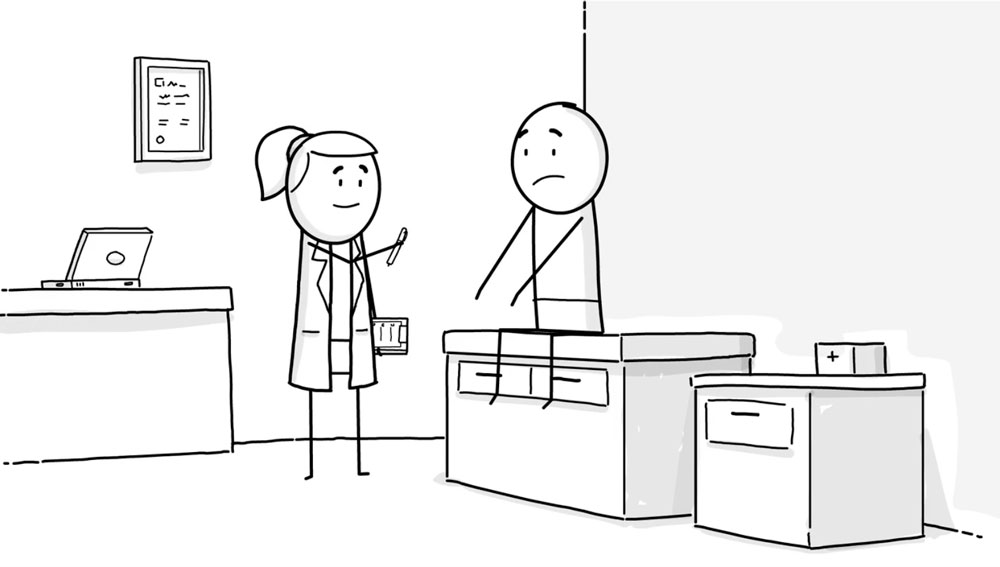
Video is one of the clearest ways to explain a health topic before someone commits. In Wyzowl’s 2026 video marketing survey, 96% of people said they had watched an explainer video to learn more about a product or service. 85% said a video had convinced them to buy one.
Results depend on whether the video answers a question the viewer already has. None of the 14 organizations below has published view or conversion numbers for its video, so each entry is tagged “no public data”. Where a video states a result about the product itself, we say so and note that it is the client’s own claim.
Healthcare organizations are putting more budget into digital marketing because that’s where patients research providers, compare options, and decide who to trust. Video is one of the most effective formats in this space because it can explain services clearly, reduce uncertainty, and help people take the next step, like booking an appointment or calling your clinic.
Creamy Animation provides healthcare video production services to healthcare providers, clinics, and medical device producers, and health tech companies to explain what they do and simplify complex medical topics.
Healthcare videos help you build trust quickly and explain your services in a way people actually understand. This article covers the healthcare marketing video formats that work best, where to publish them, and how to create them without guesswork.
Start with the decision your audience is stuck on.
Yes. Animation makes it simpler because there is no real patient footage and no protected health information in the visuals. Use actors, illustrated characters or animated interface screens in place of real patient records.
If you want to feature a real patient story, get written, signed patient consent and have it reviewed by your legal team before you film. Keep patient details out of on-screen text, thumbnails and captions.
Every example on this list was produced by our team, so we can describe the brief and the creative choices behind it. Each one had to pass four tests.
| # | Organization | Video type | Style |
|---|---|---|---|
| 1 | Dr. Bill | Medical billing app explainer | Motion graphics |
| 2 | ChartLamp | Health data explainer | 2D animation |
| 3 | ClaimWell | Healthcare billing explainer | Motion graphics |
| 4 | Fujitsu | Hospital scheduling software explainer | 2D animation |
| 5 | SpeeDx | Diagnostics company explainer | Motion graphics |
| 6 | BC Renal | Kidney assessment patient video | 2D animation |
| 7 | MMR Vaccine | Public health explainer | 2D animation |
| 8 | Prime Inc. | Mechanism of action animation | Motion graphics |
| 9 | Coast Mental Health | Mental health service explainer | Whiteboard animation |
| 10 | Disability Rights Oregon | Health policy advocacy video | 2D animation |
| 11 | Family Caregiver Alliance | Caregiving nonprofit explainer | 2D animation |
| 12 | Family Caregiver Alliance | Caregiver story video | 2D animation |
| 13 | Manitoba Nurses Union | Member orientation video | Whiteboard animation |
| 14 | Manitoba Nurses Union | AGM explainer | Whiteboard animation |
These five videos explain clinical and administrative products to physicians, hospitals, payers and buyers.
What the video is about: Dr. Bill is billing software for doctors in Canada. The video introduces the app to physicians who handle their own billing. It covers adding patients, creating claims and catching missed billing items.
Why it works: The script opens on how billing feels to a doctor: stressful, confusing and not why they went into medicine. Each feature then gets one job on screen, from LabelSnap adding a patient in seconds to real-time alerts for missed premiums. One number closes it. Dr. Bill states that 97% of claims sent through the app get paid.
What the video is about: ChartLamp is a health data company. Its software turns text-based medical records into images that show a person's history in anatomical context. The video explains the product to legal teams who review medical records.
Why it works: The first line compares reading a long medical record to searching a dark room for one item. Everything after that works as a before and after. One cost claim carries the close: up to 90% less than text-based summaries.
What the video is about: ClaimWell is a healthcare billing platform. It moves billing documents and records from providers to insurers over a HIPAA-compliant system. The video explains how it shortens the wait for payment.
Why it works: The script starts with the provider's problem. Providers wait months to get paid, which leads to negotiations, collection agencies and legal costs. Automated follow-up and payment reminders come next. Both audiences get a line at the end. Insurers keep good payment rates and providers get paid on time.

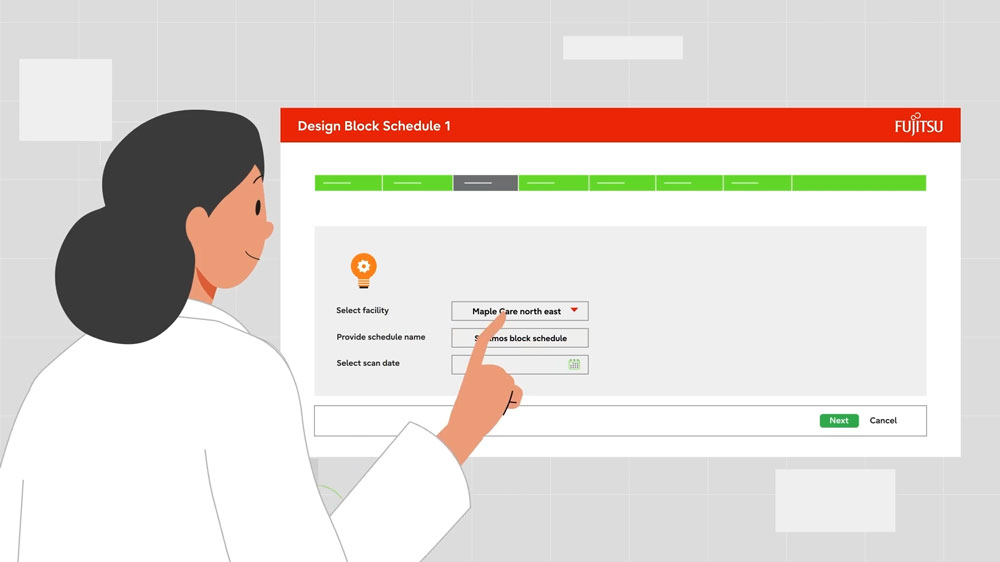
What the video is about: Fujitsu built a surgical scheduling tool with Baptist Health South Florida. The video explains the tool to hospital surgical teams. It covers the recommendation engine, the block scheduling wizard and a digital twin for testing scenarios.
Why it works: The video states a trial result in the first minute: a 37% improvement in available prime-time OR minutes over three months, equal to 231 new full-day blocks. The detail that follows gives a hospital buying committee what it needs. At 3:20 it is the longest product explainer on this list.
What the video is about: SpeeDx develops molecular diagnostic tests. This motion graphics video presents the company's diagnostic products. It does it in just over a minute.
Why it works: Motion graphics suit diagnostics because the product works at a scale no camera can film. A medical demo video like this shows how a product works and why a customer should use it. It keeps to one product story.
These four videos explain a condition, a treatment or a service to patients and families.
What the video is about: BC Renal plans kidney care services in British Columbia. This patient education video covers kidney assessment. It runs just over a minute and a half.
Why it works: 2D animation can show what happens inside the body in plain pictures. That keeps the focus on what the patient needs to understand. The short length suits a video a patient can watch before an appointment.
What the video is about: This public health video explains why the MMR vaccine matters for families. It describes the symptoms of measles. It also explains how serious the illness can be, especially for babies.
Why it works: The tone stays calm. That suits a topic that can worry parents. Animation keeps the facts clear and repeatable across every channel the video runs on.
What the video is about: This medical animation shows how burosumab works. Burosumab is an antibody used to treat X-linked hypophosphatemia (XLH) and tumor-induced osteomalacia (TIO). The video was produced for pharmaceutical education.
Why it works: It explains how excess FGF23 leads to phosphate wasting and poor bone mineralization. Then it shows burosumab binding the excess FGF23, so phosphate levels and bone mineralization improve. Each step is something the viewer can watch happen. A camera cannot film any of it.
What the video is about: Coast Mental Health is a mental health nonprofit. This whiteboard video explains what the organization does. It is written for the people who qualify for its services.
Why it works: People cannot use a service they do not understand. The video uses plain language throughout. The drawing builds as the narration goes, so the viewer follows one idea at a time.
These three videos turn a health cause into one clear action for supporters, donors or lawmakers.
What the video is about: Disability Rights Oregon protects the rights of people with disabilities. This one-minute video asks supporters to back a legislative change on medication costs. Some insurers stopped counting drug-maker financial assistance toward patients' out-of-pocket costs.
Why it works: Patients find out mid-year, when they are suddenly on the hook for thousands in refills. The script explains that mechanism without the industry term for it. One line of moral framing follows: nobody should have to choose between medication and food. Then comes the policy ask and a URL.
What the video is about: Family Caregiver Alliance supports people caring for family with complex needs and cognitive impairment. This video explains the organization's work in California. It mixes the organization's numbers with quotes from real caregivers.
Why it works: It opens with the scale of unpaid care in the US: nearly 38 million people giving 36 billion hours. The numbers that follow include 3,000 caregivers served in the Bay Area and resources in Spanish, Chinese, Tagalog and Vietnamese. The caregiver quotes carry the emotional weight. The numbers carry the credibility.
What the video is about: This is a second video for Family Caregiver Alliance. It tells a story about the people behind caregiving. It uses character animation instead of statistics.
Why it works: Character animation carries the emotional weight that statistics alone would miss. It pairs well with example 11. One video gives the numbers and the other gives the person.
These two videos are a short series for a nurses union. Each one answers a single member question.
What the video is about: Manitoba Nurses Union represents more than 13,000 nurses across the province. This video shows members how the union is organized. It also explains how members can take part.
Why it works: The script opens with a welcome, then builds the structure from the member outward. Your local is your home base, your crew at your worksite. Your region brings locals together. It does all this without reading like a rulebook.
What the video is about: This second Manitoba Nurses Union video answers one member question: what happens at the AGM? It explains that the AGM is the union's highest decision-making body. Members debate ideas, vote on resolutions, review financial reports and the budget, and sometimes hold elections.
Why it works: It then sorts out who can vote. Voting delegates can move resolutions and vote. Observers can speak but not vote. Guests and staff have no voting rights.
The right healthcare marketing video looks different depending on what kind of practice or organization you run. Here’s how the approach shifts across a few common healthcare niches.
Dental practices get the most out of short procedure walkthroughs, new-patient welcome videos, and before-and-after case videos that reduce appointment anxiety. A quick Invisalign or implant explainer video that answers the two or three questions patients ask most before booking usually outperforms a long promotional reel.
Families researching a community for a parent or relative want to see the space and hear from current residents and staff before they ever schedule a tour. Community walkthrough videos, day-in-the-life features, and family testimonial videos are consistently strong performers for senior living marketing.
When the product itself is complex, an animated explainer video that shows how a device works inside the body, on a monitor, or within a clinical workflow builds buyer confidence faster than a spec sheet. This is where 2D animation or motion graphics pairs well with a product demo, especially for diagnostics platforms, wearables, and remote monitoring tools.
Therapy practices, counseling centers, and behavioral health organizations have their own considerations, from sensitivity around language to building trust before a first appointment. Example 9, Coast Mental Health, shows one approach.
As more care moves online, patients need to understand how to book a virtual visit, use a patient portal, or navigate a remote monitoring app before they’ll trust it. A short product walkthrough video reduces support calls and abandoned sign-ups, and it’s often the first piece of video content a telehealth or digital health brand needs.
Because these videos frequently touch patient data, keep real patient details out of marketing footage. Use actors, illustrated characters, or animated interface walkthroughs instead. This is also why animated explainer videos are the default format for compliance-conscious healthcare marketing teams: there’s no protected health information to manage or accidentally disclose in the visuals themselves. Mammothic Films’ healthcare video production team builds these as fully animated pieces for exactly that reason.
A standard animated explainer video for a healthcare practice typically starts around $5,000. More detailed 2D or 3D healthcare and medical device explainer videos run $10,000 to $25,000, depending on length and complexity. See our animation cost guide for a full breakdown.
Most single animated videos take four to six weeks from brief to delivery. A series takes longer overall but less time per video, since the design system only gets built once.
The strongest healthcare marketing videos answer one specific question a patient already has, like what a procedure involves, what a visit will look like, or why they should choose your practice. They do it in under two minutes, using plain language instead of clinical terminology.
Most healthcare marketing videos perform best at 60 to 90 seconds for social and website use. Patient education videos that explain a specific procedure can run two minutes or longer. The examples above range from 1:04 to 3:46.
Animation is the simpler choice when the topic involves patient data or something a camera cannot film, such as how a drug works inside the body. Live action suits videos built on real people and places, such as a “meet the doctor” video or a clinic tour.
Put it where patients or buyers make the decision. For a clinic that means the homepage and the relevant service page. For a health tech company it means the product page, sales emails and demos. Short cut-downs work for social channels.
Yes. Get written, signed patient consent and a legal review before filming a real patient story. Animated videos avoid this step because they show no real patients or protected health information.
Four to six weeks for a single animated video. A series takes longer overall but less time per video, since the design system only gets built once.
For over 15 years me and my team at Creamy Animation have worked with healthcare SaaS, clinics, dental practices, and other organizations in the medical industry.
Creamy Animation has come to understand that healthcare marketing is never complete without the use of video. Healthcare videos allow you to connect with your audience and scale your communications to reach a wider audience and client base. Need a video and don’t know where to start? Request a free consultation. Mammothic Films is ready to help.


Larry is the Founder and Producer at Mammothic Films, with more than 15 years of production experience. He leads a team that creates story-driven videos for businesses and brands. A marketer, designer, and animator, Larry has overseen the production of more than 1,500 videos for Fujitsu, Logitech, Warner Brothers, NFL, Blockdaemon, Astronomer, Canonical, and 370+ other companies in Canada, the United States, and around the world.
Larry is a devout Christian who believes in placing God first, and that everything else is a blessing that comes from serving Him. When he’s not working, he’s hanging out with his wife and three kids, playing the piano, or sightseeing.
We use cookies to improve your experience on our site.
Manage your cookie preferences below:
Essential cookies enable basic functions and are necessary for the proper function of the website.
