Get an estimate for your project in 60 seconds. No email required.

Get an estimate for your project in 60 seconds. No email required.
 By
Larry Mutenda
By
Larry Mutenda | What are good examples of customer service training videos? Good customer service training videos teach one service skill and show it in a situation staff recognize. Strong examples include Cleveland Clinic’s Empathy film, the RSA’s animated short on empathy and TED-Ed’s lesson on how to apologize. The best ones show the customer’s side of the moment, then give staff one thing to do differently. |
A customer service training video teaches staff how to serve people well. Some teach a skill, like listening or apologizing. Others teach a standard, like how a hotel wants every guest greeted.
This list also includes customer-facing videos that do part of the service job themselves. A clear how-to answers a customer’s question before they need to ask it. Two of the examples are videos we produced through our training video production work. The list moves between animation and live action, so you can compare how each format handles a service lesson.
We picked videos from organizations known for service, published on their own official channels, that you can watch on this page. For each third-party video we name who made it and give a figure only where one has been published.
This list sticks to service skills. It leaves out the compliance and process topics covered in our corporate training video examples. For the two videos we produced, we describe the communication challenge and the creative approach from the script.
A quick side-by-side before the full breakdown.
| # | Video | Made by | Service skill |
|---|---|---|---|
| 1 | Packing and shipping guide | JM Bullion | Customer how-to |
| 2 | Empathy: The Human Connection to Patient Care | Cleveland Clinic | Empathy |
| 3 | Brené Brown on Empathy | RSA | Empathy |
| 4 | Guest Service Gold: Tourism | AHLEI | Guest service standards |
| 5 | Leak alert walkthrough | Rancho Water | Customer how-to |
| 6 | Disability Etiquette: Respectful Interactions with People with Disabilities | Great Lakes ADA Center | Accessible service |
| 7 | The best way to apologize | TED-Ed | Service recovery |
| 8 | The secret ingredients of great hospitality | TED | Hospitality |
| 9 | How miscommunication happens | TED-Ed | Clear communication |
| 10 | 5 ways to listen better | TED | Listening |
Client: JM Bullion.
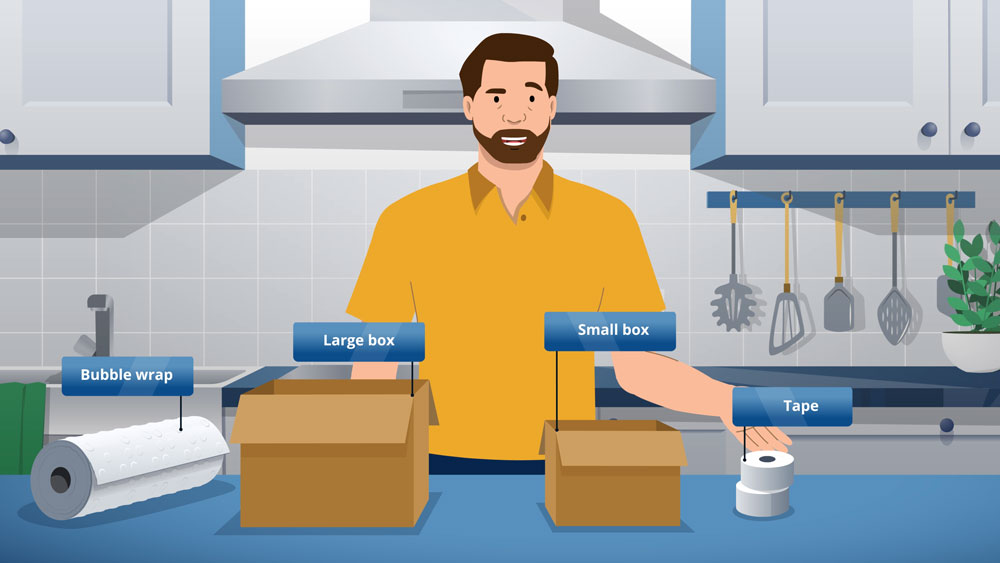
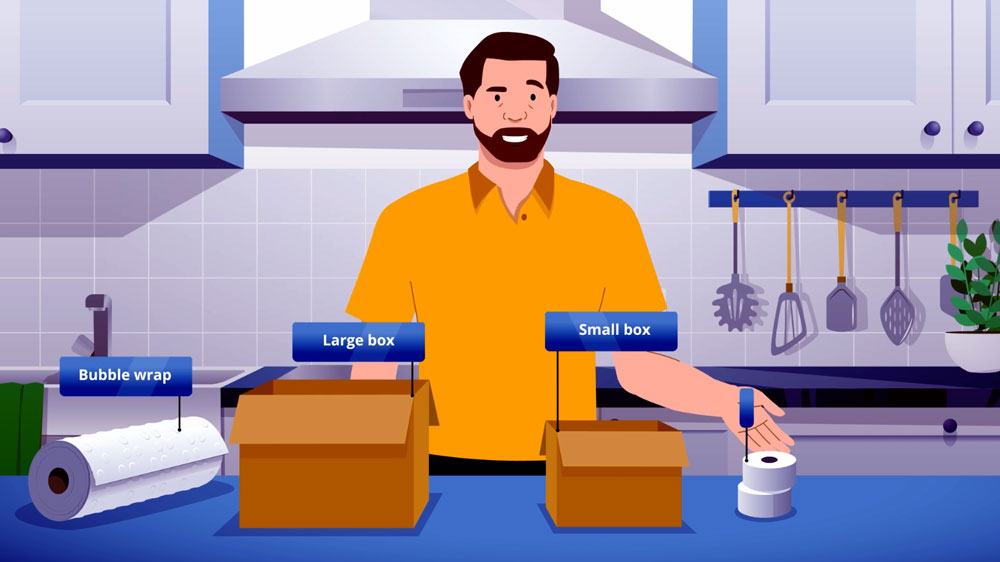
Project type: 2D animated how-to video, 1:48.
Communication challenge: Teach customers to pack and ship valuable items securely, and follow the rules that keep the shipment insured.
Creative approach: The script walks through a materials list, four numbered steps and a short set of reminders.
The script gives one instruction at a time. Use two new unmarked boxes. Label the inner box in case the outer one gets damaged. Double box, seal every seam and write nothing else on the outside. Each step carries its reason, so the customer knows why it matters.
The reminders cover the details a support team would otherwise explain one customer at a time. Drop the package at a FedEx Ship Center and ask for a receipt, because any other location voids the insurance. The video closes on the coverage it described at the time: JM Bullion’s FedEx label and insurance covered losses up to $62,500. Check JM Bullion’s current shipping terms before relying on that figure.
Empathy: The Human Connection to Patient Care is a short film Cleveland Clinic released in 2013. Text above the heads of patients, family members and staff shows their fears, thoughts and hopes as they move through the hospital.
The film asks one question. If you could stand in someone else’s shoes, would you treat them differently? It never lectures staff on empathy. It lets them see what the person at the counter might be going through.
By the numbers: Cleveland Clinic says the film is shown at every new caregiver orientation. The YouTube upload has passed 8.5 million views.
Brené Brown on Empathy is an animated RSA Short, voiced by researcher Brené Brown and animated by Katy Davis. It explains the difference between empathy and sympathy in under three minutes.
The animation turns an abstract idea into simple characters you can picture. The RSA sums up Brown’s point: a real empathic connection takes the courage to get in touch with our own fragilities.
For a service team, it offers a simple test. Does this reply connect with the customer, or only answer them?
By the numbers: The RSA’s YouTube upload has more than 23.9 million views.

Guest Service Gold: Tourism is a video introducing a training program from the American Hotel & Lodging Educational Institute (AHLEI). It applies seven guest service “golden opportunities” to tourism jobs.
The video scenarios feature real employees at restaurants, welcome centres, wineries, ski lodges, transportation services and airports. Staff see service delivered in a workplace like their own, not in a generic office.
The program also prepares employees for certification as a Certified Guest Service Professional.
By the numbers: No result has been published that we could verify.
Client: Rancho Water.
Project type: 2D animated customer how-to, 6:37.
Communication challenge: Explain what a leak alert means and what a customer should do next, without promising help the district can’t give.
Creative approach: The script opens on the customer’s own question: you may be wondering what that means.
It then explains how the alert works. Rancho Water reads the meter every hour. If water runs continuously for 24 hours, the customer gets an alert. The script says plainly that Rancho Water can’t locate and repair the leak for the customer. It then points to the tools the district does offer.
The first step is to log in to My Water Tracker and review when the leak started and how large it is. Setting expectations early is good customer service. The customer knows what the utility will do and what they need to do.
Disability Etiquette: Respectful Interactions with People with Disabilities is a short training video from the Great Lakes ADA Center, part of the national network of ADA centers. It teaches staff at businesses and nonprofits how to interact respectfully with customers and service users with disabilities.
The video is framed around Title III of the Americans with Disabilities Act. Title III covers businesses and nonprofits that serve the public, such as shops, restaurants, hotels and doctors’ offices. The video presents disability etiquette as one practical step those organizations can take.
It works as a training video because it turns a legal duty into everyday behaviour at the counter. Staff get one clear standard for how to treat each customer. At under four minutes, it fits into a team meeting.
By the numbers: No result has been published that we could verify.
The best way to apologize (according to science) is an animated TED-Ed lesson written by Kelso Harper and directed by Vitalii Nebelskyi. It walks through what makes an apology work, from non-apologies and evasive excuses to flimsy corporate promises.
The lesson describes accepting responsibility as what some researchers call the centrepiece of an apology. It notes that an offer of repair is often rated one of the most critical parts. That maps directly onto service recovery. A reply like “sorry for any inconvenience” skips both.
Animation keeps the lesson neutral. The examples aren’t about any one company, so staff can apply them to their own complaints.
By the numbers: More than 2 million views on TED-Ed’s YouTube channel.
The secret ingredients of great hospitality is a TED talk by restaurateur Will Guidara, recorded in 2022 at a TED Institute event. He owned and operated Eleven Madison Park in New York for nearly a decade. In the talk he explains what he calls unreasonable hospitality.
The talk starts with one table. Four out-of-town guests said the only thing they had not tried in New York was a street hot dog. Guidara bought one from a cart. The kitchen plated it and served it before the final course. The guests said it was the highlight of their trip.
From that moment he draws three habits any service team can practise. Be present enough to hear what people say and what they don’t. Take what you do seriously without taking yourself too seriously. Remember that one size fits one. He also points out that the hot dog cost two dollars, so this kind of service does not need a big budget.
The talk works for training because the story carries the lesson. Staff remember the hot dog, and the three habits come with it.
By the numbers: TED lists more than 2.9 million plays on TED.com, plus more than 830,000 views on TED’s YouTube channel.
How miscommunication happens (and how to avoid it) is an animated TED-Ed lesson by Katherine Hampsten, animated by Andrew Foerster. It explains why miscommunication happens so often and how to cut the frustration it causes.
It opens on moments everyone knows. A friend doesn’t grasp why a problem matters to you. An idea presented to a group is met with confusion. Service teams face the same gap every day, between what a customer says and what staff hear.
The lesson is short enough to use in a team meeting. It gives staff shared words for a problem they already live with.
By the numbers: More than 3.8 million views on TED-Ed’s YouTube channel.
5 ways to listen better is a TED talk by sound expert Julian Treasure, recorded at TEDGlobal. He argues that we are losing our listening, then gives five exercises to get it back.
The last exercise is RASA: Receive, Appreciate, Summarize, Ask. It works as a script for any service conversation. Pay attention to the customer. Show you are following. Sum up what you heard. Ask a question before offering a fix.
A talk to camera suits this lesson. The speaker models the calm, clear delivery he is teaching.
By the numbers: TED lists more than 13.4 million plays on TED.com, plus more than 5 million views on TED’s YouTube channel.
The videos on this list teach different skills. They share five patterns.
Cleveland Clinic shows the fears and hopes of the people in its hallways. Staff serve better once they see the moment from the other side of the counter.
Empathy. Apologizing. Listening. Each video takes one skill and gives it a name staff can use with each other afterwards.
RASA is four words. The JM Bullion guide is four numbered steps. A lesson that ends with a short script or a short list is easier to use on the job.
AHLEI films real employees at tourism venues. Staff can picture the lesson in their own workplace.
Rancho Water tells customers what it can’t do before explaining what it can. The TED-Ed lesson warns against flimsy corporate promises. Good service starts with clear expectations.
A customer service training video should include one skill, a realistic scenario and a clear action for staff to take. Show the customer’s side of the moment, then show the better response. Our guide on how to make a training video covers the steps from script to delivery.
Long enough for one skill. The videos on this page run from under two minutes, like the AHLEI and JM Bullion videos, to almost 14 minutes for Will Guidara’s TED talk. A short video works best when it is shown in a team meeting and discussed straight after.
Both work. Live action suits lessons about people and tone, like Cleveland Clinic’s Empathy film. Animation suits abstract ideas and processes, like the RSA’s empathy short or a step-by-step how-to. It can also show a hard situation without filming real customers.
Yes. A clear how-to, like the JM Bullion shipping guide or the Rancho Water leak alert video, answers a customer’s question at the moment they have it. It also gives support staff a single, consistent explanation to point to.
Service videos work well in the first weeks of a new job, next to the welcome and culture videos. Cleveland Clinic shows its Empathy film at every new caregiver orientation. You can see more examples in our employee onboarding video examples.
The strongest customer service training videos start with the customer’s side of the moment. Then they teach one skill staff can use on their next call or at their next counter.
If you are planning one, pick the skill first. Then choose the format, animation or live action, that shows it most clearly.

Larry is the Founder and Producer at Mammothic Films, with more than 15 years of production experience. He leads a team that creates story-driven videos for businesses and brands. A marketer, designer, and animator, Larry has overseen the production of more than 1,500 videos for Fujitsu, Logitech, Warner Brothers, NFL, Blockdaemon, Astronomer, Canonical, and 370+ other companies in Canada, the United States, and around the world.
Larry is a devout Christian who believes in placing God first, and that everything else is a blessing that comes from serving Him. When he’s not working, he’s hanging out with his wife and three kids, playing the piano, or sightseeing.
We use cookies to improve your experience on our site.
Manage your cookie preferences below:
Essential cookies enable basic functions and are necessary for the proper function of the website.