Make training easier to deliver across your organization
TRAINING VIDEO COMPANY
Training becomes difficult to scale when every facilitator explains the material differently, employees have to work through long documents, or subject-matter experts repeatedly answer the same questions.
We turn policies, presentations, procedures, and technical knowledge into professionally produced training content. Each project begins with the audience, learning objective, and delivery environment before we develop the script, visual treatment, and production format.
Training Video Practical benefits
Deliver one consistent message
An approved master gives every learner the same explanation across departments, locations, and onboarding dates. Stakeholder reviews and approvals are built into the production schedule so the instructional content is confirmed before production moves forward.
Turn information into a visual learning sequence
We organize complex material into focused training modules, then use scenarios, demonstrations, motion graphics, animation, and on-screen guidance to show how the information applies.
Build a reusable training library
A planned video series can support employee onboarding, refresher training, customer education, internal communications, and future training sessions.
Prepare content for different audiences
Where required, the production scope can include captions, alternate edits, voiceover versions, subtitles, or localization for different teams and regions.
Turn complex topics into visual storytelling that sticks
TRAINING VIDEO PRODUCTION SERVICES
Here are examples of some of the training videos we’ve produced. Each video serves a specific purpose, whether it’s onboarding employees, training on health and safety, or educating students.
Software and Process Training
Guide learners through software platforms, internal systems, product workflows, and standard operating procedures. Screen capture, interface animation, motion graphics, and voiceover can be combined to make each step easier to follow.
Learning & Development Videos
Develop professional development, leadership, communication, and workplace skills through scenario-based learning sequences. Scripts and visual narratives can demonstrate the situation, decision, and intended response.
Customer Education Videos
We turn important information into structured customer and public education, so people get clear, consistent explanations instead of repeated one-on-one answers.
How-to and Instructional Videos
Break a specific task into a clear sequence using demonstrations, diagrams, close-up filming, animation, or screen-based instruction. The visual treatment is selected according to the task and the intended audience.
Workplace Safety and Compliance Videos
Show procedures, hazards, responsibilities, and required workplace practices using live-action demonstrations, animation, or a combination of both. The production can be planned around your approved policies and subject-matter expertise.
Employee Onboarding Videos
Introduce new employees to your company’s mission, values, and daily operations before their first day on the job. Company overviews, policy walkthroughs, and internal communication formats such as town halls or crew meetings can help new hires understand their role and how the organization works.
Case Study · Corporate Training Videos
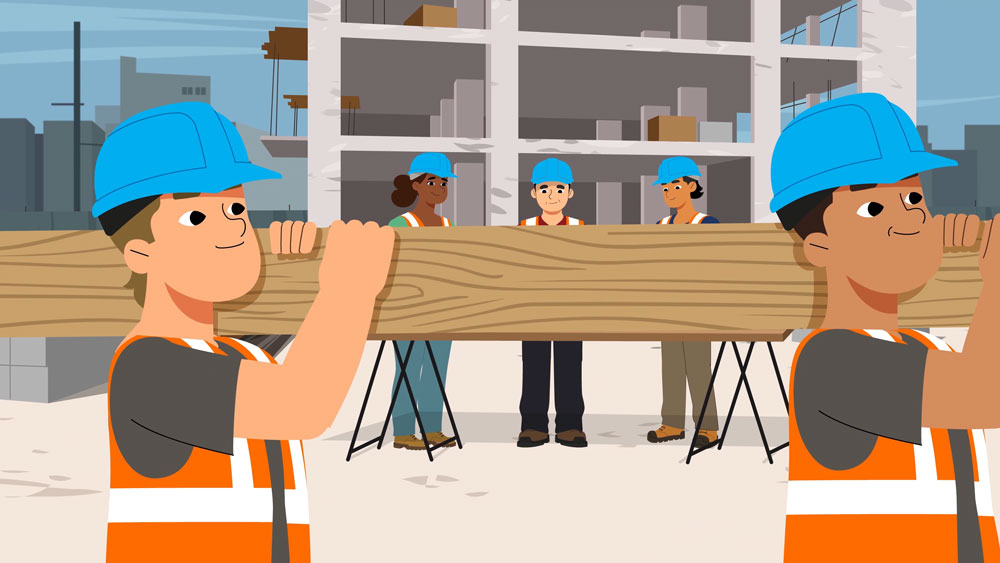
UBC Canada District made six sensitive topics stick with scenario-based animated videos
Feedback. Bias. Stereotypes. Learning styles. Skill transfer. UDL. One series, one visual language, six videos trainers reuse everywhere.
Choose the production approach that supports the learning objective. The production format should be based on what the audience needs to learn, not a predetermined visual style. Mammothic can recommend live action, animation, screen-based instruction, or a hybrid approach after reviewing the content.
Live-action training videos
Live action is useful when learners need to see real people, workplace environments, equipment, demonstrations, or physical procedures.
Pre-production can include location planning, casting, shot development, and production scheduling.
Animated training videos
Animation can visualize technical systems, abstract concepts, sensitive scenarios, or hazardous situations that are difficult to demonstrate safely on camera.
The production may include character design, custom illustration, motion graphics, diagrams, and visual metaphors.
Screen-based training videos
Screen recordings and interface animation can demonstrate software workflows, dashboards, tools, and digital processes.
Callouts, cursor movements, magnified interface details, and voiceover guide the learner through each action.
This approach works well when the training needs both human context and detailed visual instruction.
Training video production process
Video Production For Training
Discovery and Learning Strategy
We define the audience, learning objective, key message, delivery environment, and production scope. We also review your existing presentations, policies, procedures, course material, and brand guidelines.
Output: Approved production brief, content direction, and project scope.
Content and Script Development
We organize the instructional content into a logical learning sequence and determine whether the material should become one video or a series of shorter training modules. Our writers then develop the script in collaboration with your subject-matter experts and internal stakeholders.
Output: Approved script and module structure.
Storyboard and Visual Direction
The storyboard establishes the scene structure, demonstrations, scenarios, screen sequences, compositions, and on-screen text. Style frames define the art direction and visual treatment before full production begins.
Output: Approved storyboard and visual direction.
Production
Depending on the selected approach, production may include live-action filming, custom illustration, character design, motion graphics, animation, interface sequences, or screen recording. Your team reviews the work at defined production milestones so feedback can be consolidated before the project advances.
Output: Review cut for stakeholder approval.
Post-Production and Final Delivery
During post-production, we complete the edit, voiceover, music, sound design, graphics, captions, and audio mix. After the final cut is approved, we prepare the master video and any additional delivery formats included in the production scope.
Output: Approved master and agreed delivery package.
Why work with Mammothic Films
Start with the training material you already have
You do not need to provide a production-ready script. We can work from policies, presentations, procedures, course material, rough notes, or recorded interviews with your subject-matter experts.
Develop the content before production begins
We use scripts, storyboards, and style frames to confirm the instructional content, learning sequence, and visual direction before filming or animation production begins.
Use the right production method for the subject
Our capabilities include live-action production, character animation, motion graphics, interface animation, demonstrations, and screen-based instruction. We select the approach based on the learning objective and production scope.
Keep stakeholder reviews organized
Review cycles and approval milestones are built into the production schedule. This gives internal stakeholders clear opportunities to approve the script, storyboard, visual direction, and review cuts.
Keep strategy and production connected
Content planning, script development, creative direction, production, editing, and post-production are managed as one connected workflow.
Training video production FAQs
What is a training video?
A training video explains a process, concept, or policy in a structured visual format designed for learning.
How much does a training video cost?
The cost depends on your specific project. The video style, length, number of modules, scripting, voiceover, and languages all affect the final price. Because every training program is different, we quote each project on its own. Standard custom-made training videos start at $3,000, while higher premium production quality videos start at $5,000. AI assisted videos start at $1,500.
For more accurate pricing on your project, please fill out the contact form below to get started.
Who creates corporate training videos?
Specialized training video production companies like ours combine instructional design with animation and professional video production.
How long does production take?
Timelines vary by complexity and number of modules. Most projects follow a clear, step-based workflow, with a single video taking an average of 2-4 weeks to produce. This also depends on the style of video. Find out in this article on how we create training videos.
Do you handle the script?
Yes. We develop scripts that align with your learning goals and brand voice.
Who owns the rights to the video?
You receive full copyright and usage rights to all finished videos and design assets.
Can you match our branding?
All visuals, colors, and tone are aligned with your brand guidelines.
What if our content is technical or complex?
We specialize in simplifying complex information into clear, visual explanations.
Let's plan your training video project
Tell us what your audience needs to learn, what training material you already have, and where the finished videos will be used. We’ll recommend the content structure, production format, creative scope, budget, and schedule.
You do not need a completed brief or finished script. Your existing presentations, policies, course material, or rough notes are enough to begin the conversation.
Request a strategy call / quote to get started.
Cookie Consent
We use cookies to improve your experience on our site.